
Disclosure: This guide contains one affiliate link and a discount code. If you buy through them, She Chooses Well may earn a commission at no extra cost to you. Prices were checked on Warmy & Tummy’s store on 13 November 2026 and are in USD; “from” prices refer to the smallest size or set available.
You spend roughly a third of your life between your sheets, yet most people choose them on colour and a thread-count number printed on the packet. The fabric and weave matter far more. They decide whether your bed feels crisp or silky, whether you wake up hot at 3am, and whether the sheets still look good after a year of washing.
This guide explains the main sheet types (percale, sateen, bamboo, lyocell and linen), why thread count is mostly marketing, how to choose if you sleep hot or cold, how to pick a comforter weight, and how to care for bedding so it lasts. Better sheets won’t fix every sleep problem, but they remove one of the easiest-to-solve sources of discomfort.
Weave vs fibre: the two things that matter
Every sheet is defined by two choices: the fibre (cotton, bamboo viscose, lyocell, linen, polyester) and the weave (how threads cross each other). The same cotton can feel completely different in a percale weave and a sateen weave. When a product says “cotton sheets”, that only tells you half the story.
Cotton percale: crisp and cool
Percale is a simple one-over, one-under weave. The result is a matte, breathable fabric with a crisp hand, often compared to a freshly ironed shirt or a classic hotel sheet. Percale stays cool to the touch and gets softer with washing.
- Best for: hot sleepers, warm climates, people who like a “clean” crisp feel.
- Trade-offs: wrinkles more easily; can feel slightly rough on the first few nights.
Cotton sateen: smooth and silky
Sateen uses a weave where more threads float on the surface (typically one under, three or four over). That gives a smooth, lustrous finish with a soft drape, and a slightly warmer, cosier feel than percale.
- Best for: people who sleep cool, cold bedrooms, anyone who loves a silky feel.
- Trade-offs: less breathable; the floating threads are more prone to snagging and pilling over time.
Bamboo: silky, cool-feeling and drapey
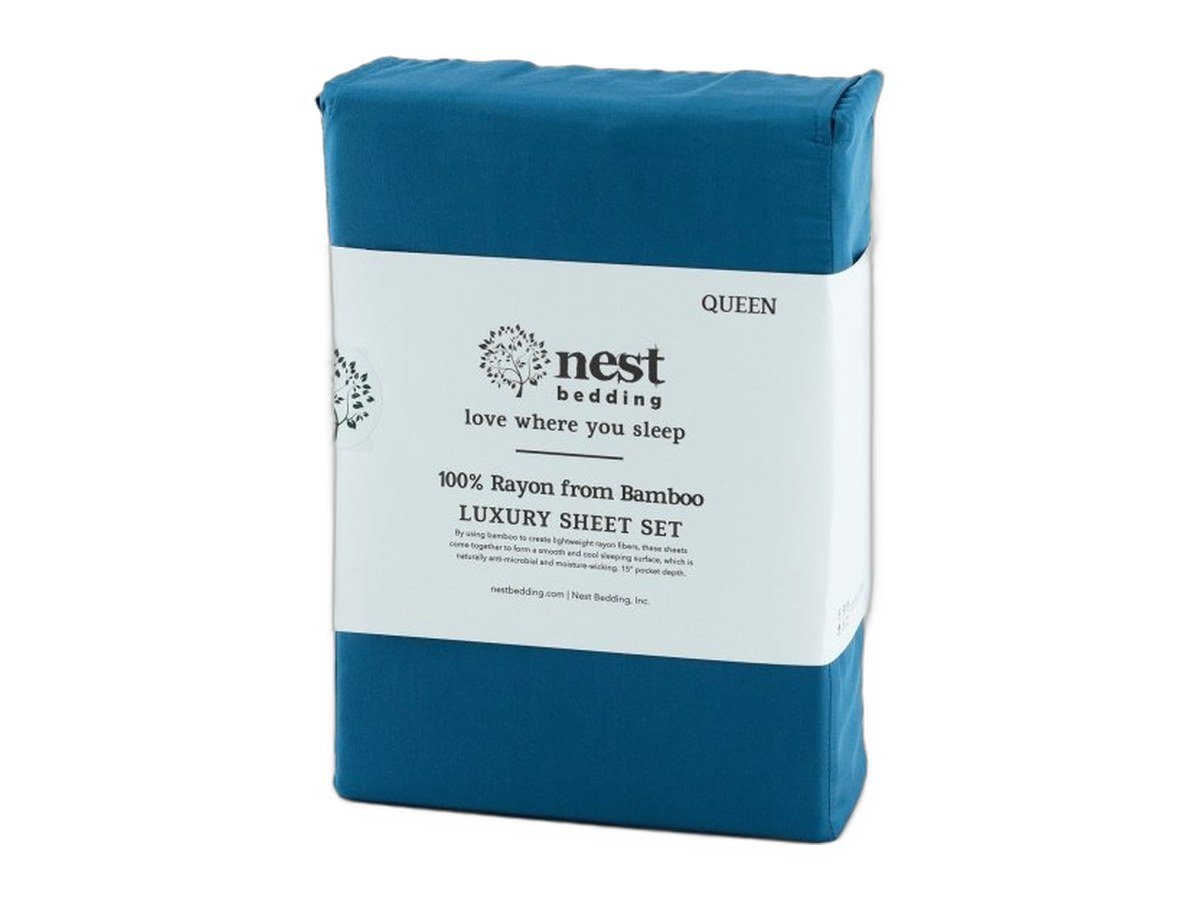
Most “bamboo” sheets are bamboo viscose (also called rayon from bamboo): bamboo pulp dissolved and regenerated into a fibre. The result is very soft, smooth and cool against the skin, with a subtle sheen. The softness is real; some environmental claims are more complicated, because conventional viscose processing uses chemicals, so look for brands that explain their process or certifications.
- Best for: hot sleepers who want softness rather than crispness; sensitive skin.
- Trade-offs: more delicate than cotton; can pill or lose shape if washed hot or tumble-dried on high.
Lyocell (TENCEL™): moisture-wicking and smooth
Lyocell is another regenerated cellulose fibre, usually made from eucalyptus or other wood pulp. TENCEL™ is the best-known brand of lyocell and is produced in a closed-loop process that recovers most of its solvent. Lyocell is smooth, drapey and particularly good at handling moisture, which many night sweaters appreciate.
- Best for: night sweats, humid climates, eco-conscious buyers.
- Trade-offs: needs gentle washing; can feel “slippery” to people used to cotton.
Linen: breathable and textured
Linen, made from flax, is the most breathable of the common bedding fabrics and has a relaxed, textured, slightly rumpled look. It starts out stiffer and softens a lot over many washes.
- Best for: very hot sleepers and summer; people who like an undone, natural look.
- Trade-offs: expensive; wrinkles by design; can feel coarse at first.
Certifications worth knowing
A few labels give you real information about what’s in your bedding. OEKO-TEX® STANDARD 100 means the finished fabric has been tested for a list of harmful substances. GOTS (Global Organic Textile Standard) certifies organic fibre content and processing standards. RDS (Responsible Down Standard) covers animal welfare in down supply chains. Claims like “eco-friendly” or “natural” without a named certification are much harder to verify, so look for the specific standard and, ideally, a certificate number.
Thread count: why higher isn’t better
Thread count is the number of threads per square inch. Past a certain point it stops meaning much:
- Around 200–400 is the sweet spot for good-quality single-ply cotton percale and sateen.
- Very high numbers (800, 1,000+) are often achieved by twisting thin “multi-ply” threads together and counting each ply. That can make sheets heavier and less breathable without making them better.
- Fibre quality matters more. Long-staple cotton (longer fibres) makes smoother, stronger yarn that pills less than short-staple cotton, regardless of thread count.
- Thread count isn’t comparable across fabrics. A 300-thread-count bamboo sheet and a 300-thread-count cotton percale feel completely different.
What about microfibre and polyester?
Microfibre sheets are inexpensive, wrinkle-resistant and soft out of the packet, which makes them popular for guest rooms and children’s beds. The downside is breathability: polyester holds heat and moisture more than natural or cellulose fibres, so many people sleep warmer on it. If budget is tight and you sleep cool, microfibre can be perfectly fine. If you overheat at night, spending a little more on percale, bamboo or lyocell is usually worth it.
Choosing for hot or cold sleepers
| You… | Choose | Avoid |
|---|---|---|
| Wake up hot or sweaty | Percale, linen, lyocell, bamboo | Sateen, flannel, polyester microfibre |
| Always feel cold at night | Sateen, flannel in winter | Linen in winter |
| Share a bed with someone who runs hot | Breathable sheets plus separate comforters or blankets | One heavy duvet for both |
| Have sensitive skin | Smooth natural fibres, OEKO-TEX® certified where possible | Heavily finished or scented fabrics |
Comforters: fill, warmth and weight
Your top layer often matters more for temperature than your sheets. A few principles:
- Down vs alternative. Down is light for its warmth and breathable; down-alternative fills are easier to wash and suit people avoiding animal products or with down sensitivity.
- Warmth levels. Many brands offer light, all-season and extra-warm versions. If you run hot, a light comforter plus a throw you can add is more flexible than one heavy duvet.
- Cover fabric. A breathable cotton shell helps moisture escape; synthetic shells can feel clammy.
- Construction. Baffle-box or sewn-through stitching keeps fill evenly spread so you don’t end up with cold spots.
Care: making bedding last
- Wash sheets weekly in warm (not hot) water with a mild detergent. Very hot washes speed up wear.
- Skip fabric softener, especially on bamboo and lyocell; it coats fibres and reduces breathability.
- Dry on low or line-dry. Over-drying is the main cause of shrinkage and fibre damage. Remove promptly to reduce wrinkles.
- Rotate two sets so each one gets rest between uses.
- Air your comforter regularly and use a duvet cover so it needs washing only occasionally.
Pillowcases: the detail closest to your face
Your pillowcase touches your face and hair for hours every night, so it’s worth choosing deliberately. Smooth fabrics such as sateen, bamboo, lyocell and silk create less friction than crisp percale or textured linen, which many people find gentler on hair and less likely to leave creases on the skin by morning. Hot sleepers may prefer a cooler-feeling bamboo or lyocell case even if their sheets are cotton. Whatever you choose, wash pillowcases at least weekly; they collect skincare, hair products and oil faster than the rest of your bedding.
Five signs it’s time to replace your sheets
- Visible thinning or holes, especially where your feet and shoulders rest.
- Persistent pilling that makes the surface feel rough.
- Yellowing that doesn’t wash out, usually from body oils and skincare.
- Elastic that no longer grips the mattress, so fitted sheets keep slipping off the corners.
- You’ve changed mattresses and the old sheets don’t fit the new depth. Check the pocket depth on fitted sheets before buying.
Good-quality sheets washed with care often last several years, but if you rotate only one set, expect it to wear out faster.
Sizing: avoid the most common mistake
Fitted sheets list a “pocket depth”, the mattress thickness they’re designed for. Thick mattresses and mattress toppers often need deep-pocket sheets. Measure your mattress height including any topper before ordering, and check that the sheet’s pocket depth is at least a few centimetres deeper so the elastic can tuck underneath. For duvet covers, measure your comforter rather than assuming it matches your bed size, as comforter dimensions vary between brands.
Small bedroom changes that help you sleep cooler
- Layer instead of one heavy duvet, so you can remove a layer at night.
- Keep the room cool and well ventilated; a fan moving air across the bed makes a noticeable difference.
- Choose breathable sleepwear in cotton, bamboo or lyocell rather than synthetic fabrics.
- Consider a cooling mattress pad if your mattress traps heat, especially memory foam.
A closer look: Warmy & Tummy bedding
Warmy & Tummy is a bedding brand that sells several of the sheet types above side by side, along with comforters, cooling products and throws. That makes it a useful place to compare fabrics.
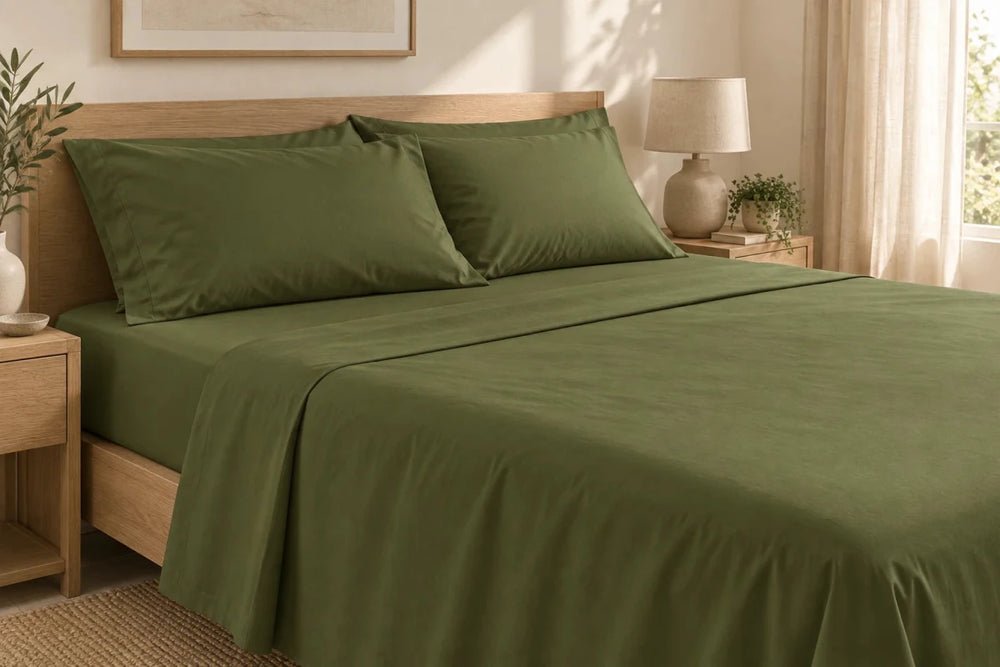
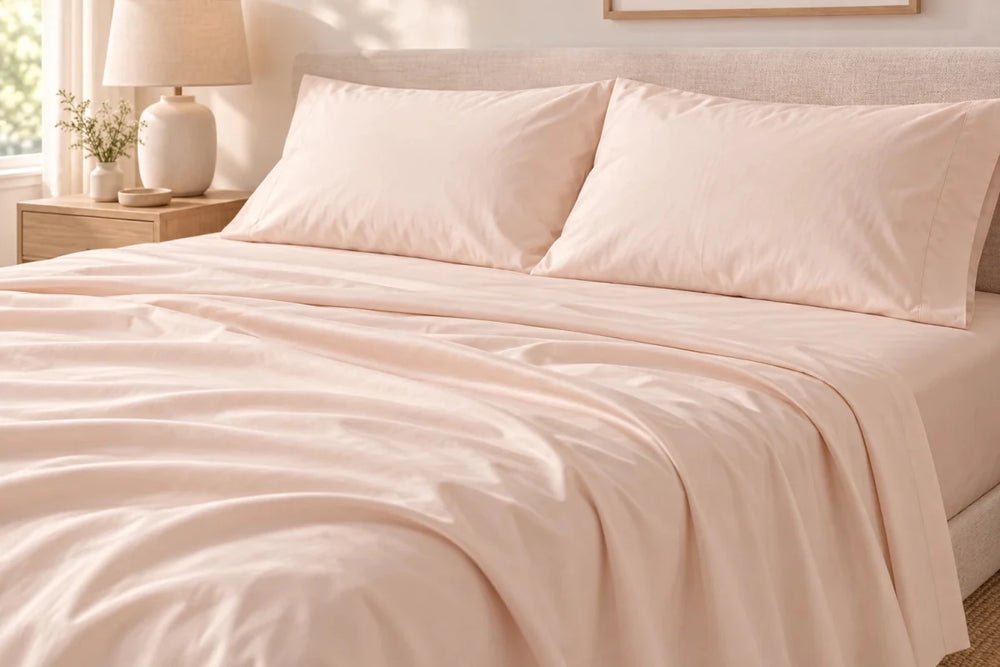
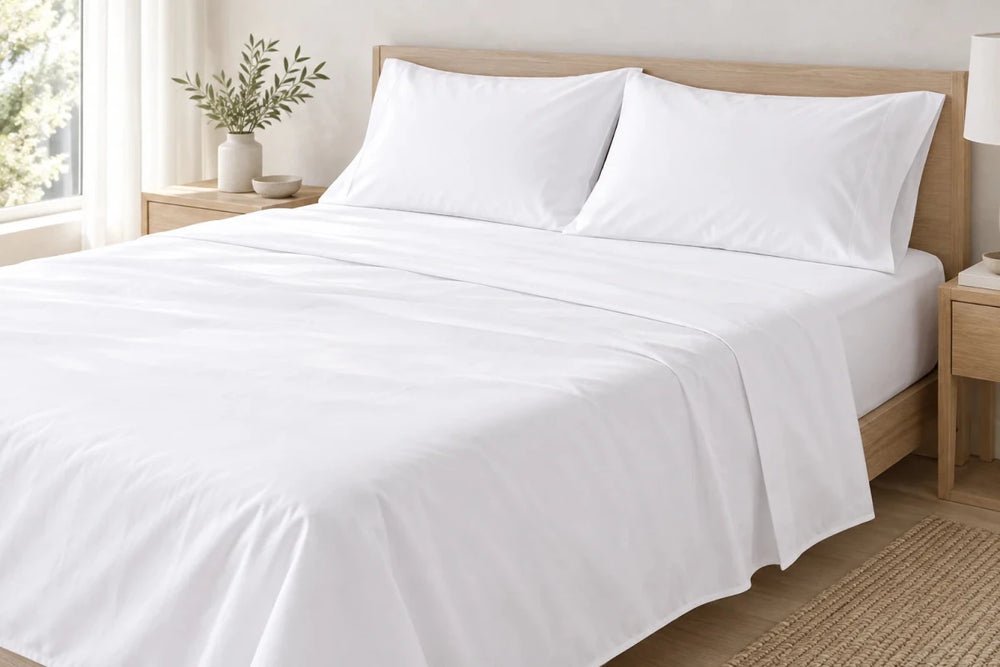
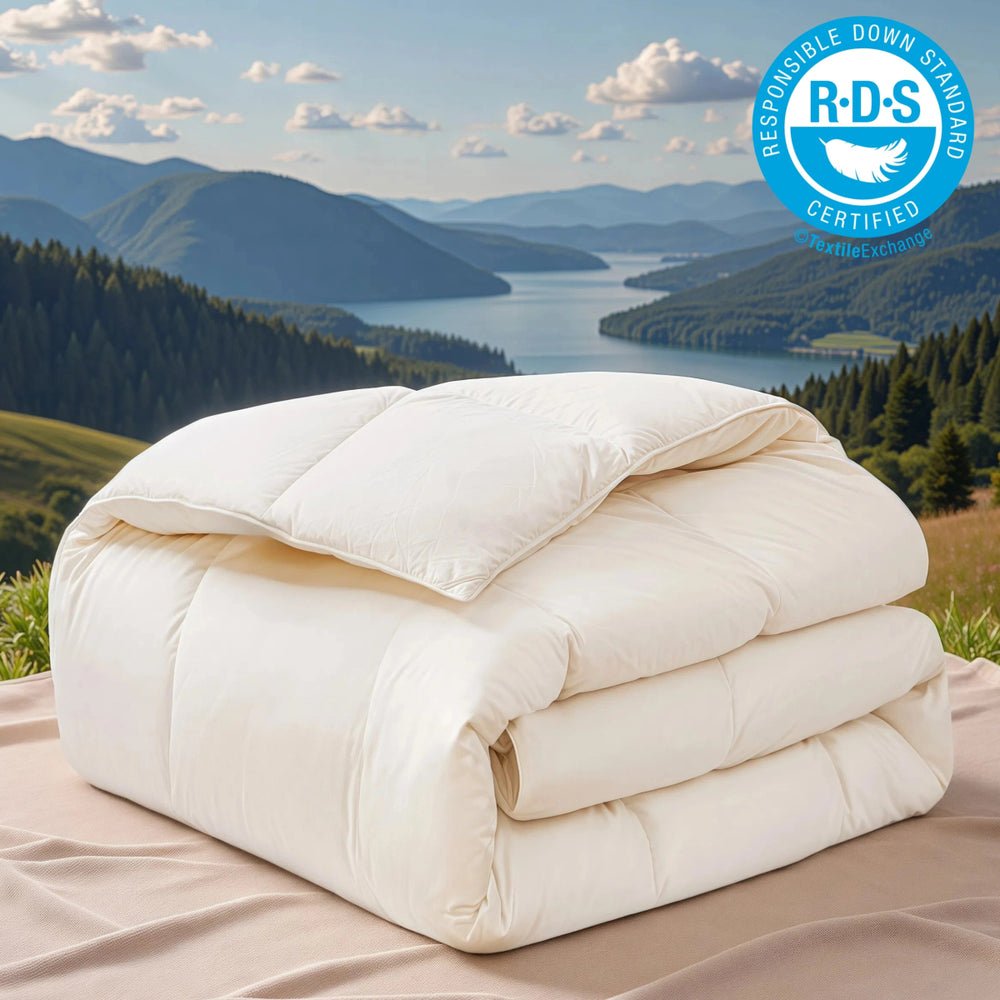
Images: Warmy & Tummy
| Product | Details (per Warmy & Tummy) | Price (USD) |
|---|---|---|
| Crisp Percale Cotton Bed Sheets | 100% long-staple cotton, 300 thread count percale; crisp, cool feel | from $76 |
| Smooth Sateen Cotton Bed Sheets | 100% long-staple cotton, 500 thread count sateen; sizes Twin to California King; also as duvet cover | from $80 |
| Silky Bamboo Bed Sheets | Bamboo, 300 thread count, subtle sheen; described as temperature-regulating | from $81 |
| TENCEL™ Sheet Set + Pillowcases | Eucalyptus-based lyocell; the brand highlights moisture-wicking | from $42 |
| Organic Cotton Goose Down Comforter (Ultra-Warm) | Extra-warm down comforter | from $199 |
| Summer-Breeze Down Comforter | Ultra-light, all-natural version | from $109 |
| ICE 3D MAX Cooling Mattress Pad + Pillowcases | Cooling mattress pad for hot sleepers | from $199 |
The 300-thread-count percale and 500-thread-count sateen sit sensibly within the range we recommend, and both use long-staple cotton. Hot sleepers should start with percale, bamboo or TENCEL™; cold sleepers with sateen and the warmer comforter.
Things to know before ordering
- Delivery: standard shipping typically takes 6–10 business days, expedited 3–6 business days.
- Returns: a 30-day return window from delivery. Warmy & Tummy’s policy explicitly says you can return a comforter even after taking it out of the packaging and sleeping under it, without original packaging or tags; it states there’s no restocking or handling fee and that return shipping is covered. You need to email the brand to start a return before sending anything back.
- “From” prices reflect the smallest size; Queen and King sets cost more. Check the price for your size before comparing.
- Struck-through “original” prices are large on some items; judge value on the current price and fabric spec rather than the size of the discount.
How to buy and save at Warmy & Tummy
- Use the code WELCOME15 at checkout for 15% off.
- Buy one set first in the fabric you think suits you; with the 30-day return window, you can test it properly before buying a second set.
- Pair sheets with the right comforter weight rather than defaulting to the warmest option.
Enter WELCOME15 in the discount field and check the order summary before paying.
Shop Warmy & Tummy bedding – code WELCOME15 for 15% off
Sources (checked 13 November 2026): Warmy & Tummy product pages for Crisp Percale, Smooth Sateen, Silky Bamboo and TENCEL™ sheets, comforters and the ICE 3D MAX Cooling Mattress Pad; Warmy & Tummy Shipping Policy and Return & Refund Policy (warmytummy.com). General textile information reflects standard industry definitions of weaves, fibres and thread count.