
Disclosure: This guide contains one affiliate link and a discount code. If you buy through them, She Chooses Well may earn a commission at no extra cost to you. Prices were checked on Charabanc Aroma’s store on 13 November 2026 and are shown in approximate USD; the store displays your local currency.
Scent is one of the fastest ways to change how a room feels. A fresh citrus note in the morning, something warm and woody in the evening, a familiar fragrance that tells your brain the working day is over. Diffusers have become a popular alternative to candles because there’s no flame and no soot, and you can switch scents easily.
But “diffuser” covers several very different devices, and the type you choose affects how strong the scent is, how much oil you use, how much maintenance it needs and how safe it is around pets and children. This guide compares the main diffuser types, explains essential oils versus fragrance oils, covers safety, and shows how to build a simple scent routine for your home.
The four main ways to scent a room
| Type | How it works | Scent strength | Upkeep |
|---|---|---|---|
| Ultrasonic | Vibrations turn water with a few drops of oil into a fine mist | Light to moderate; diluted by water | Refill water often; clean regularly to prevent residue |
| Waterless / nebulizing | Air pressure breaks pure oil into tiny particles without water | Strong; fills larger spaces | No water; uses oil faster |
| Reed diffuser | Rattan reeds wick scented oil into the air passively | Gentle and constant | Flip reeds occasionally; no power |
| Candle / wax melt | Heat releases scent from wax | Moderate | Open flame or heat; soot with some waxes |
Ultrasonic vs waterless: which to choose
Choose ultrasonic if…
- You want a soft background scent in a bedroom or small room.
- You like the look of mist and the added touch of humidity.
- You want each bottle of oil to last as long as possible (you only use a few drops at a time).
Choose waterless if…
- You want a clearer, truer scent that fills a living room or open-plan space.
- You don’t want to deal with water tanks, residue or mould.
- You prefer scheduled bursts of scent rather than continuous mist.
Waterless diffusers use oil faster, so the cost per hour is higher. Many models run on a cycle (a few minutes on, a few minutes off) to stretch the oil and prevent the scent becoming overwhelming.
Quiet operation matters more than you think
A diffuser that hums, clicks or gurgles is easy to ignore in a busy kitchen but irritating in a bedroom or home office. Ultrasonic models are usually quiet but can make small bubbling sounds; waterless diffusers vary, with some producing a soft hiss from the air pump. If you plan to use one while working or reading, look for brands that mention silent or low-noise operation, and check customer reviews that mention sound.
Essential oils vs fragrance oils
Essential oils are concentrated plant extracts, such as lavender, sweet orange or eucalyptus. Fragrance oils are blends that may include essential oils, natural isolates and synthetic aroma molecules, designed to create a specific scent (think “fig and cedar” or “fireside”). Neither is automatically safer: natural doesn’t mean non-allergenic, and well-made fragrance blends can be carefully regulated.
What matters more is transparency. Good brands list declared allergens such as linalool, limonene, citral and geraniol, so people with fragrance sensitivity can avoid what bothers them.
How much oil to use
With ultrasonic diffusers, start with three to five drops per 100 ml of water and adjust from there; more oil doesn’t always mean a better scent, and it can irritate eyes and airways. With waterless diffusers, follow the manufacturer’s fill line and start on the shortest cycle or lowest intensity. You can always increase the strength, but it’s hard to clear an over-scented room quickly. If you notice headaches or a scratchy throat, reduce the amount, shorten run times and open a window.
Store oils tightly closed, upright and away from heat and light, which degrade them. Most scented oils keep their character for a year or two once opened; citrus notes tend to fade fastest.
Diffusing safely
- Use intermittently. Run a diffuser for 30–60 minutes, then take a break, rather than all day in a closed room.
- Ventilate. Keep a door or window slightly open, especially with waterless diffusers.
- Pets: cats are particularly sensitive to many essential oils, and birds are sensitive to airborne particles of all kinds. Veterinary organisations advise caution: keep diffusers out of pets’ reach, ventilate well and leave them a scent-free room to retreat to. Stop if a pet shows drooling, coughing, wobbliness or breathing changes, and contact a vet.
- Babies and young children: avoid strong diffusing in nurseries and children’s bedrooms; some oils (such as eucalyptus and peppermint) aren’t recommended around young children.
- Asthma and migraines: scent can be a trigger. Start low, or skip diffusing in shared spaces.
- Pregnancy: many people choose to avoid strong diffusing; ask your midwife or doctor if you’re unsure.
- Never ingest diffuser oils or apply undiluted oil to skin.
Room size and placement
- Match the device to the space. A small ultrasonic diffuser suits a bedroom or bathroom; a waterless diffuser or larger unit suits a living room or open-plan space. A diffuser that’s too small for the room leads people to run it all day, which isn’t ideal.
- Place it at waist height or above, on a stable surface, so the mist or scent disperses before settling.
- Keep it away from electronics, wood finishes and fabrics that the mist could touch directly; oil residue can mark surfaces.
- Avoid draughty spots right next to open windows or air vents, which blow scent away before it fills the room.
- Keep it out of reach of pets and children, and away from where a cat might knock it over.
Diffusers vs candles: what about indoor air?
Both scented candles and diffusers release compounds into the air. Candles also produce combustion by-products and soot, especially paraffin candles and wicks that aren’t trimmed. Diffusers avoid flame and soot, but they still add fragrance molecules to your air, and some fragrance ingredients can react with ozone indoors to form secondary pollutants. The practical takeaway isn’t to avoid scent altogether, but to use it in moderation: ventilate, run devices intermittently and choose transparent brands.
Cleaning and maintenance
Ultrasonic diffusers need the most care. Empty leftover water after each use, wipe the reservoir, and clean weekly with a little white vinegar or isopropyl alcohol on a cotton swab, especially around the ultrasonic plate. Standing water can grow bacteria and mould, which you then breathe in as mist. Waterless diffusers are simpler: when you change scents, run the device briefly with a small amount of the new oil, or clean the nozzle as the manufacturer recommends, so scents don’t mix. Reed diffusers just need fresh reeds every few months, since old reeds clog and stop wicking.
Building a simple scent routine
| Moment | Scent families that suit it |
|---|---|
| Morning | Citrus, green, mint: bright and fresh |
| Working from home | Herbal and light woods: present without distracting |
| Evening wind-down | Lavender, soft florals, warm woods, amber |
| Guests and gatherings | A signature scent you use only on these occasions |
Linking a scent to a moment works like a cue: over time, smelling your evening scent can become part of how you switch off. Keep the bedroom scent subtle, and turn the diffuser off before you sleep.
How to choose scents you won’t get tired of
Scent preferences are personal, but a few principles help when buying online without smelling first:
- Read the scent pyramid. Good descriptions list top notes (what you smell first), heart notes and base notes (what lingers). If you love the base notes, you’ll probably love the scent over time.
- Start with familiar families. If you already like a perfume, look for home scents in the same family: citrus, floral, woody, amber, gourmand or green.
- Buy samplers first. Sets of small bottles are the best way to discover what works in your home’s air and light.
- Rotate. Your nose adapts to a scent within minutes to hours (“olfactory fatigue”). Rotating two or three scents keeps each one noticeable.
- Keep the bedroom lighter. Soft, low-intensity scents work better where you sleep than bold, sweet or spicy ones.
Creating a signature home scent
Many people love the idea of their home having a recognisable scent, the way some hotels do. The trick is consistency and restraint: choose one scent for the main living space, use it at the same times (for example when guests arrive or in the early evening), and keep it subtle enough that people notice it on arrival rather than all evening. Complement it with gentle, unscented basics: fresh air, clean textiles and a tidy kitchen do more for how a home smells than any diffuser.
Scent and wellbeing: keeping claims realistic
Many people find certain scents relaxing or energising, and pleasant smells can lift mood and help create rituals. Research on aromatherapy suggests modest effects for some uses, such as lavender and relaxation, but evidence is mixed and often comes from small studies. Enjoy scent for what it reliably offers, comfort, atmosphere and a cue for routines, rather than expecting it to treat anxiety, insomnia or other health conditions. If you’re struggling with sleep or stress, see the sections in our wind-down guide and speak to a professional if it persists.
A closer look: Charabanc Aroma
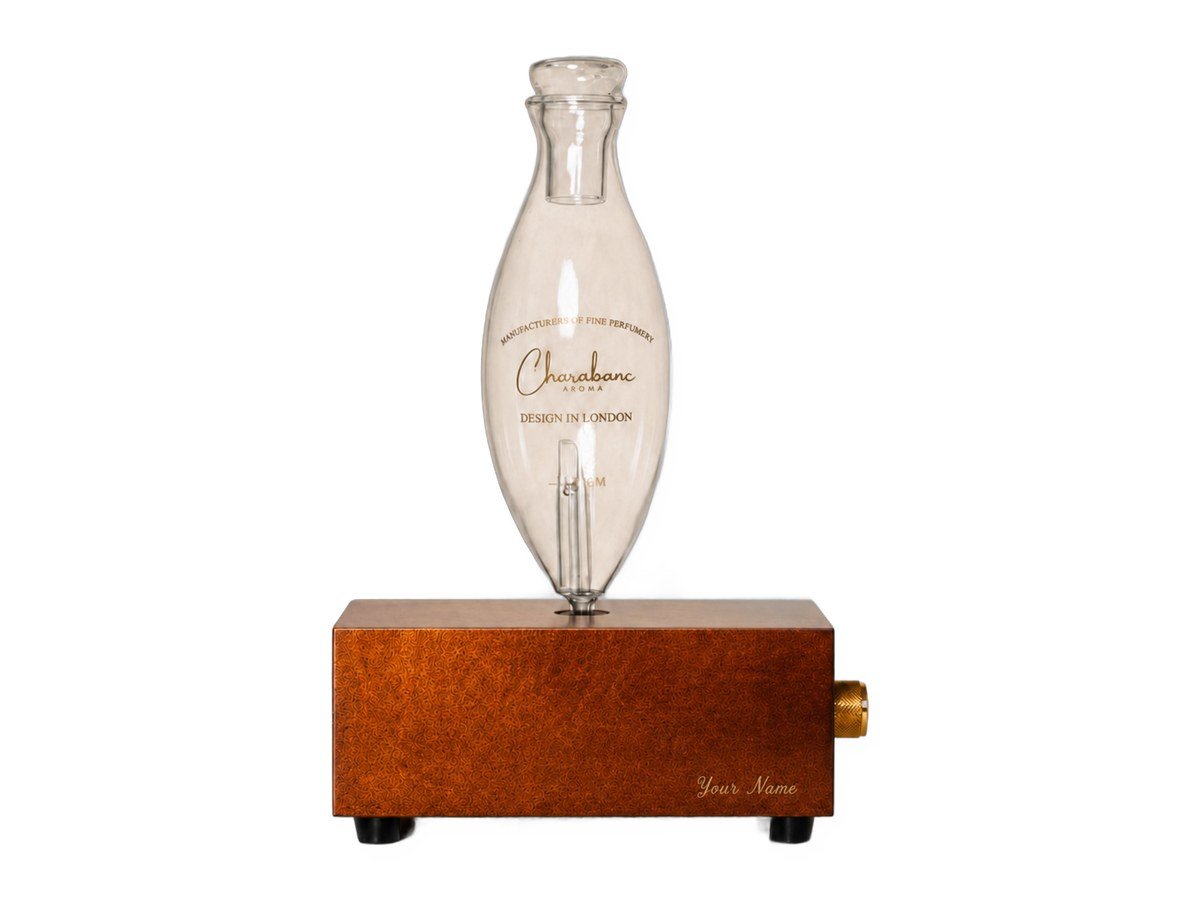
Charabanc Aroma sells waterless diffusers and a range of numbered scent oils. Its Mini diffuser, for example, combines a European balsam wood base with waterless technology, which the brand describes as silent. According to Charabanc, it runs on an automatic cycle of five minutes of mist followed by a three-minute pause, with a maximum run time of three hours, and comes with a 30 ml bottle of oil.
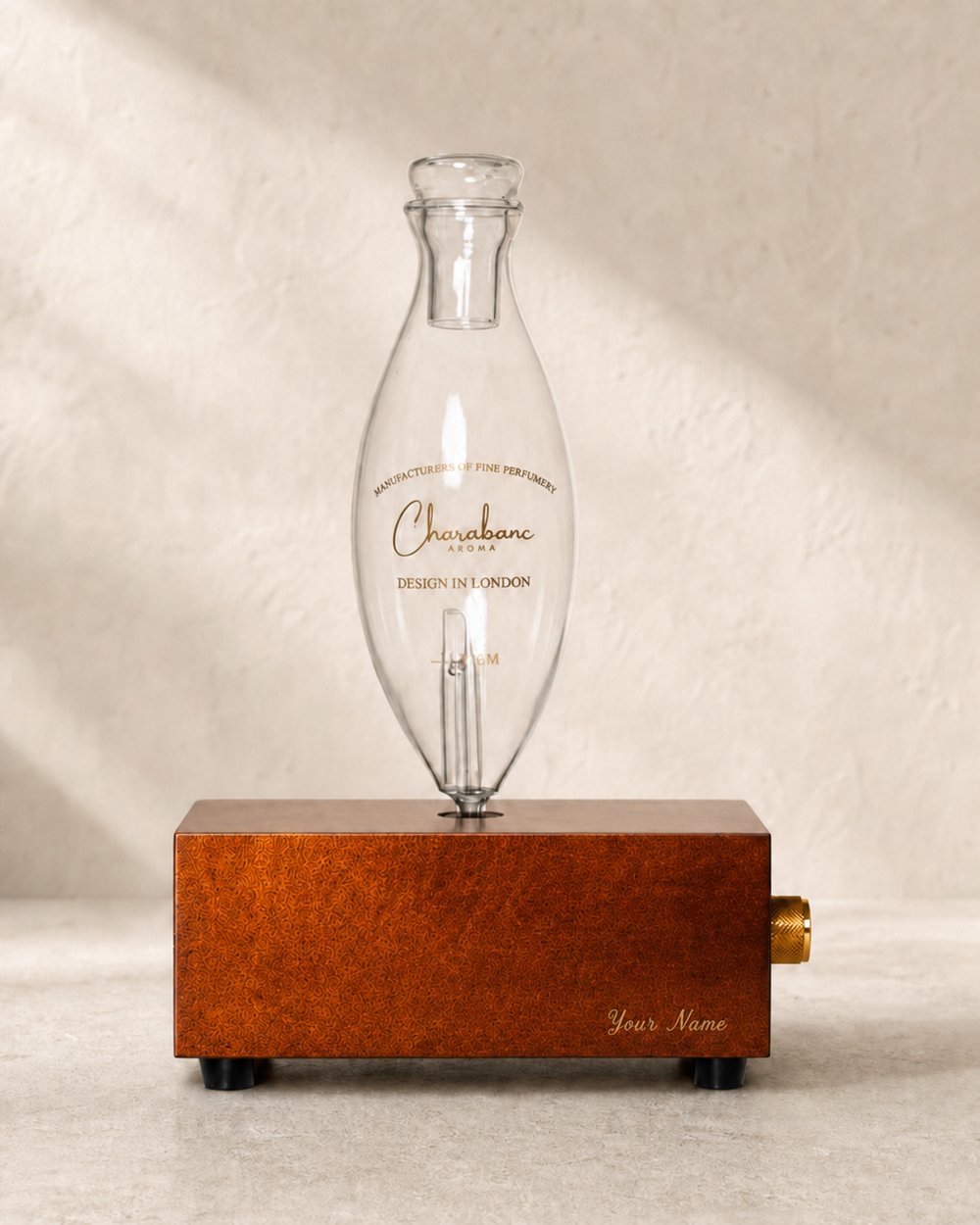

Images: Charabanc Aroma
| Product | What it is | Approx. price (USD) |
|---|---|---|
| Oil Diffuser MINI (engraved / personalised) | Waterless diffuser with wooden base; 30 ml oil included | ~$99 |
| Single scent oils (e.g. No.15 Jasmine Whisper, No.68 Wisteria & Lavender Veil) | Numbered scent blends | ~$25 each |
| Discovery Set — Five Signature Scents | Sampler of five scents | ~$59 |
| The Curator’s Portfolio: 10-Piece Oil Collection | Larger set | ~$128 (listed down from ~$250) |
A useful detail: Charabanc’s scent pages list declared fragrance allergens. The Jasmine Whisper oil, for instance, lists limonene, linalool, citral, geraniol, citronellol and benzyl benzoate. That’s helpful if you know you react to particular compounds. It also tells you these are fragrance blends rather than single essential oils, despite the “essential oil” product naming.
Things to know before ordering
- Shipping: worldwide with tracking; orders are processed in 1–2 business days. Each region has a free-shipping threshold; below it, express shipping is the only option, so it can pay to add a second scent.
- Returns: a 14-day return policy. Opened oils are often not returnable for hygiene reasons, so the Discovery Set is a lower-risk way to test scents.
- Running costs: as with any waterless diffuser, expect to use oil faster than with an ultrasonic model.
How to buy and save at Charabanc Aroma
- Use the code REBECCA at checkout for 10% off.
- Start with the Discovery Set plus a diffuser, then buy full bottles of the scents you love.
- Check your region’s free-shipping threshold before paying for express delivery.
Enter REBECCA in the discount field and confirm the reduced total on the order summary.
Shop Charabanc Aroma – code REBECCA for 10% off
Sources (checked 13 November 2026): Charabanc Aroma product pages for the Oil Diffuser MINI, scent oils including No.15 Jasmine Whisper, Discovery Set and Curator’s Portfolio, including declared allergens and run-cycle details; Charabanc Aroma Shipping Policy and Refund Policy (charabancaroma.store). Safety guidance reflects published veterinary and public health advice on essential oils and diffusers.