
Disclosure: This guide contains one affiliate link and a discount code. If you buy through them, She Chooses Well may earn a commission at no extra cost to you. Prices were checked on Romalar Jewelry’s US store on 13 November 2026 and are in USD.
Opal, moonstone, moss agate and turquoise have had a huge moment in engagement and promise rings. They are softer in colour than a diamond, every stone looks a little different, and they usually cost far less. They also come with a catch that most product pages skip: none of them is as tough as a diamond, a sapphire or a moissanite, and a ring is the piece of jewellery that takes the most abuse.
That does not mean you should avoid them. It means you should choose the right stone for how you live, put it in the right setting and metal, and know the few habits that keep it looking new. This guide covers all of that: what hardness and toughness actually mean, how each of the four stones behaves in daily wear, which settings protect a soft stone, what the metal choice changes, and how to size a ring you are ordering online. At the end we look at one made-to-order jeweller that sells all four, and how the code HAPPYSAVE takes 20% off.
Hardness vs toughness: the two numbers that matter
Jewellers describe durability with two separate ideas, and mixing them up is how people end up surprised.
- Hardness is resistance to scratching, usually given on the Mohs scale from 1 to 10. A harder material scratches a softer one, never the other way round.
- Toughness is resistance to chipping, cracking and breaking when the stone is knocked. A stone can be fairly hard and still brittle.
- Stability is resistance to heat, light, chemicals and moisture. This is where opal and turquoise need the most care.
The single most useful number to remember is 7. Ordinary household dust contains tiny particles of quartz, which sits at 7 on the Mohs scale. Every time a ring is wiped, rubbed or brushed against a dusty surface, anything softer than 7 gets micro-scratched. One day makes no difference; a few years of daily wear turns a polished surface into a slightly hazy one. That is why diamonds, sapphires and moissanite stay bright and why softer stones gradually lose their polish.
All four stones in this guide sit at or below that line. The question is not whether they will show wear, but how fast, and what you can do to slow it down.
The four stones, honestly compared
| Stone | Mohs hardness | Toughness | Main weak spot | Everyday ring? |
|---|---|---|---|---|
| Moss agate | 6.5–7 | Good (no cleavage) | Slow surface wear | Yes, the most forgiving of the four |
| Moonstone | 6–6.5 | Fair (has cleavage) | Can split from a sharp knock | Yes, with a protective setting and some care |
| Opal | 5.5–6.5 | Fair to poor | Heat, dryness and impacts; can craze | Possible, but treat it as delicate |
| Turquoise | 5–6 | Fair | Porous; absorbs oils, lotions and dyes | Better as an occasional ring |
Hardness figures are the ranges published by the Gemological Institute of America (GIA). Toughness and stability notes summarise GIA’s care guidance for each stone.
Moss agate: the practical choice
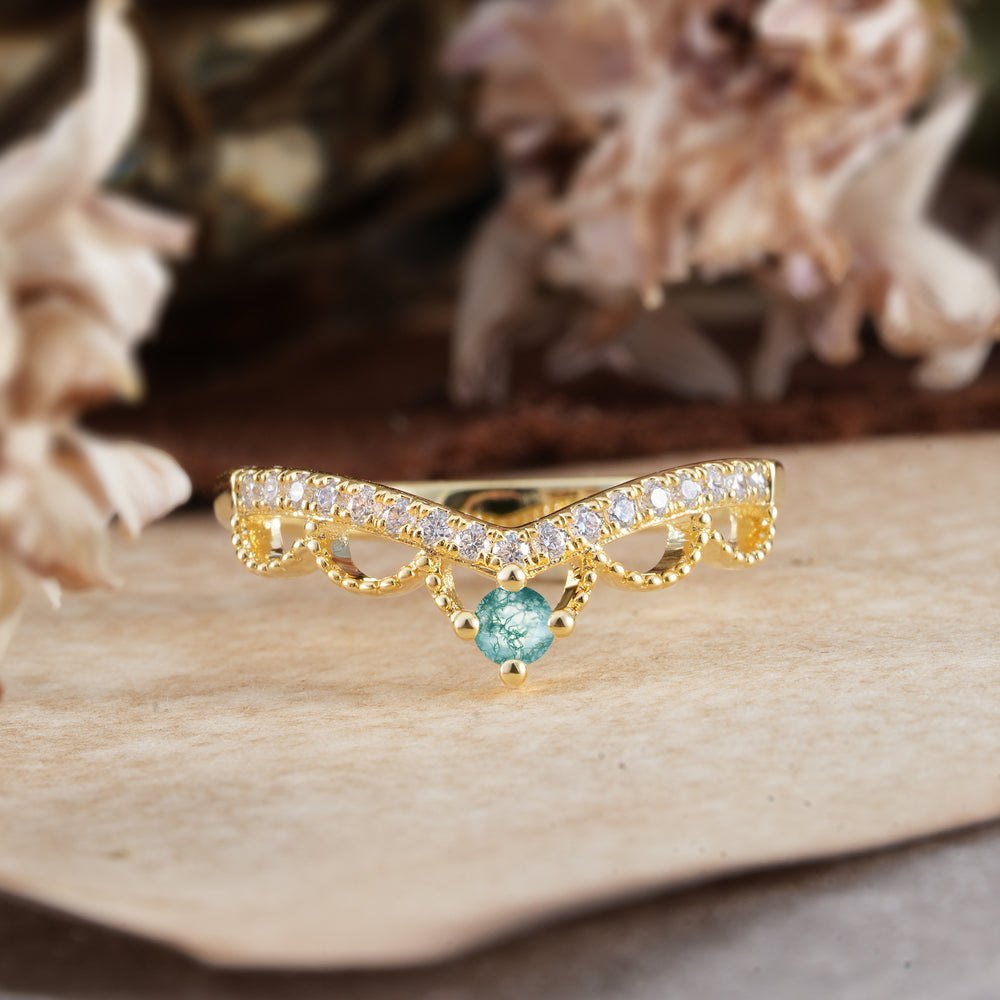
Moss agate is a variety of chalcedony, a fine-grained quartz. The green “moss” is made of mineral inclusions trapped inside a translucent stone, so no two look alike. Because its structure is made of interlocking micro-crystals and it has no cleavage plane, it is surprisingly tough for its hardness. It will lose some polish over years of daily wear, but it is unlikely to chip from an ordinary knock against a door frame. If you want a gemstone ring you can forget you are wearing, this is the safest of the four.
Moonstone: beautiful glow, one structural weakness
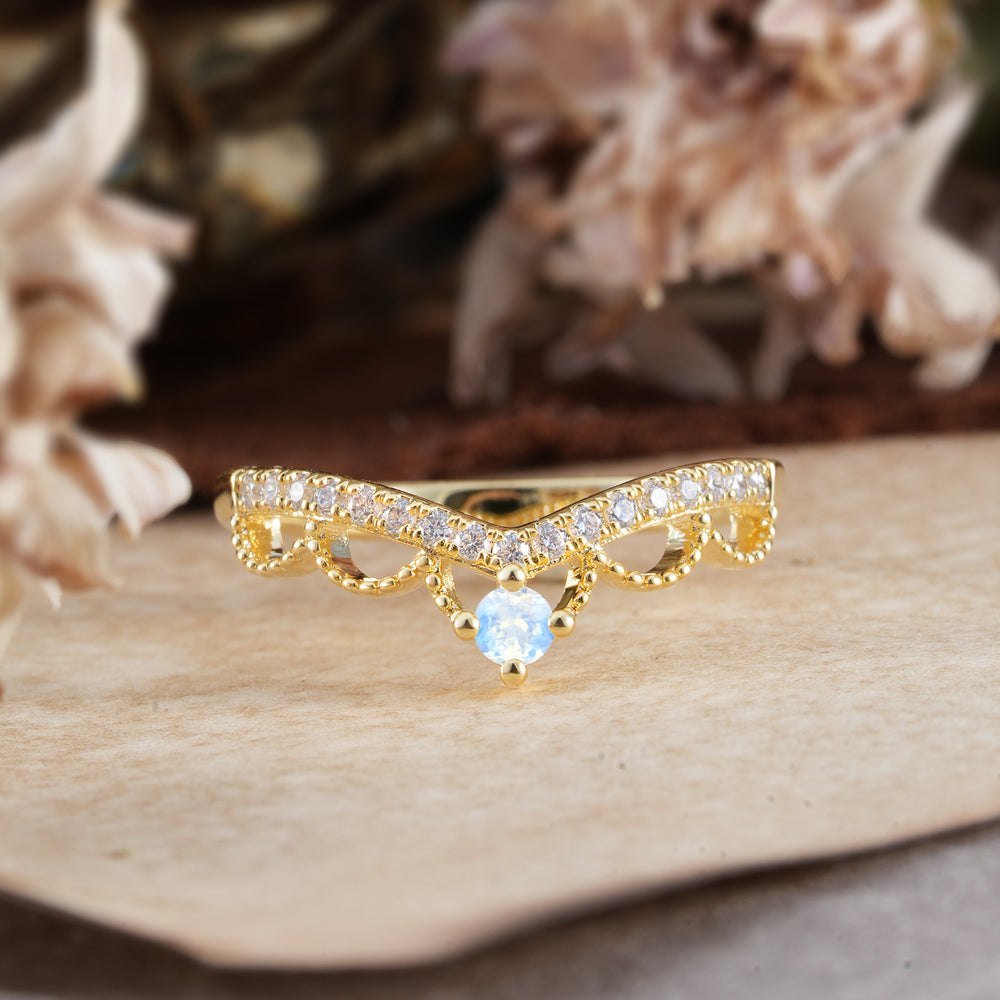
Moonstone is a feldspar, and its glow (called adularescence) comes from light scattering between thin internal layers. Those same layers are its weak spot: feldspar has cleavage, which means it can split cleanly along a plane if it takes a sharp blow at the wrong angle. GIA rates its toughness as poor to fair. Daily wear is realistic if the stone sits in a setting that protects its edges and you take the ring off for the gym, heavy lifting and gardening.
Opal: the one that needs a plan
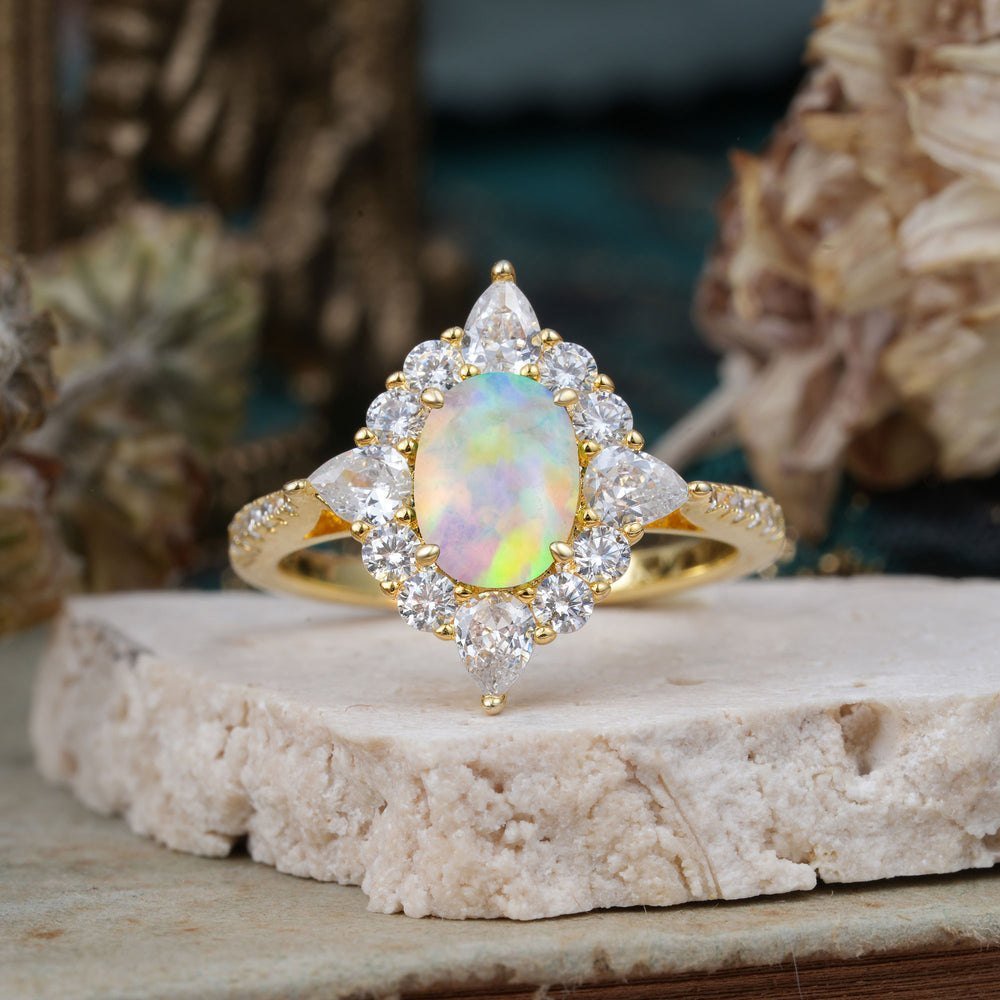
Opal is not a crystal at all but a hardened silica gel containing water, typically several percent by weight. That water is why it plays with colour, and also why it is sensitive. Sudden temperature changes, strong heat (think oven doors or a hot car dashboard) and very dry conditions can cause fine cracks called crazing. Opal is also among the softer and more brittle ring stones. Plenty of people wear opal engagement rings daily, but they treat them like a silk blouse rather than a pair of jeans: a protective setting, no ultrasonic cleaner, and off for chores.
Turquoise: lovely colour, porous surface
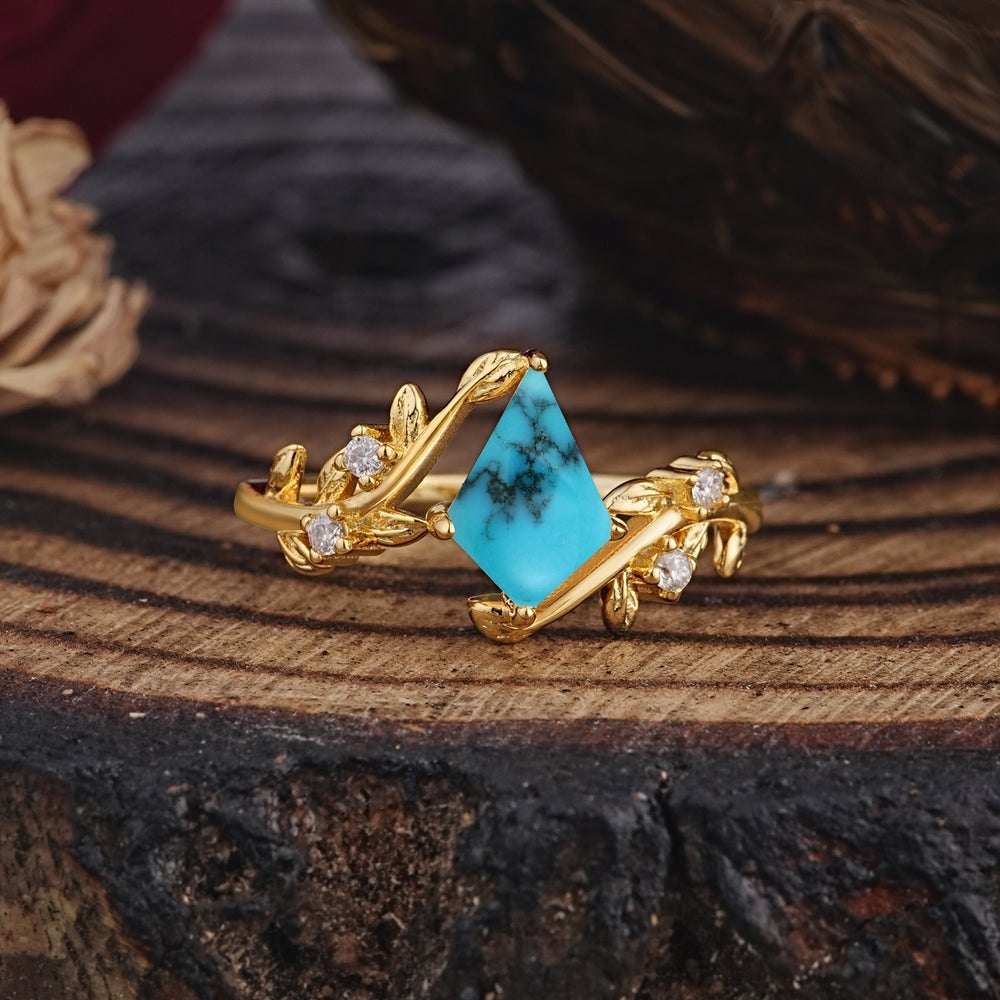
Turquoise is porous. Skin oils, hand cream, perfume, sunscreen and cleaning products can soak in and gradually shift its colour, often towards green. Much of the turquoise on the market is stabilised (impregnated with a resin) to reduce this, and good sellers say so. Even so, turquoise is the softest of the four and is best suited to a ring you wear for evenings or weekends rather than through every hand wash.
Product photos: Romalar Jewelry
Settings that protect a softer stone
With a diamond, the setting is mostly about looks. With a stone at 7 or below, the setting is your main line of defence. What you want is metal standing between the stone’s edges and the world.
- Bezel settings wrap a thin rim of metal around the whole stone. They are the most protective option for opal, moonstone and turquoise and work well for active lifestyles.
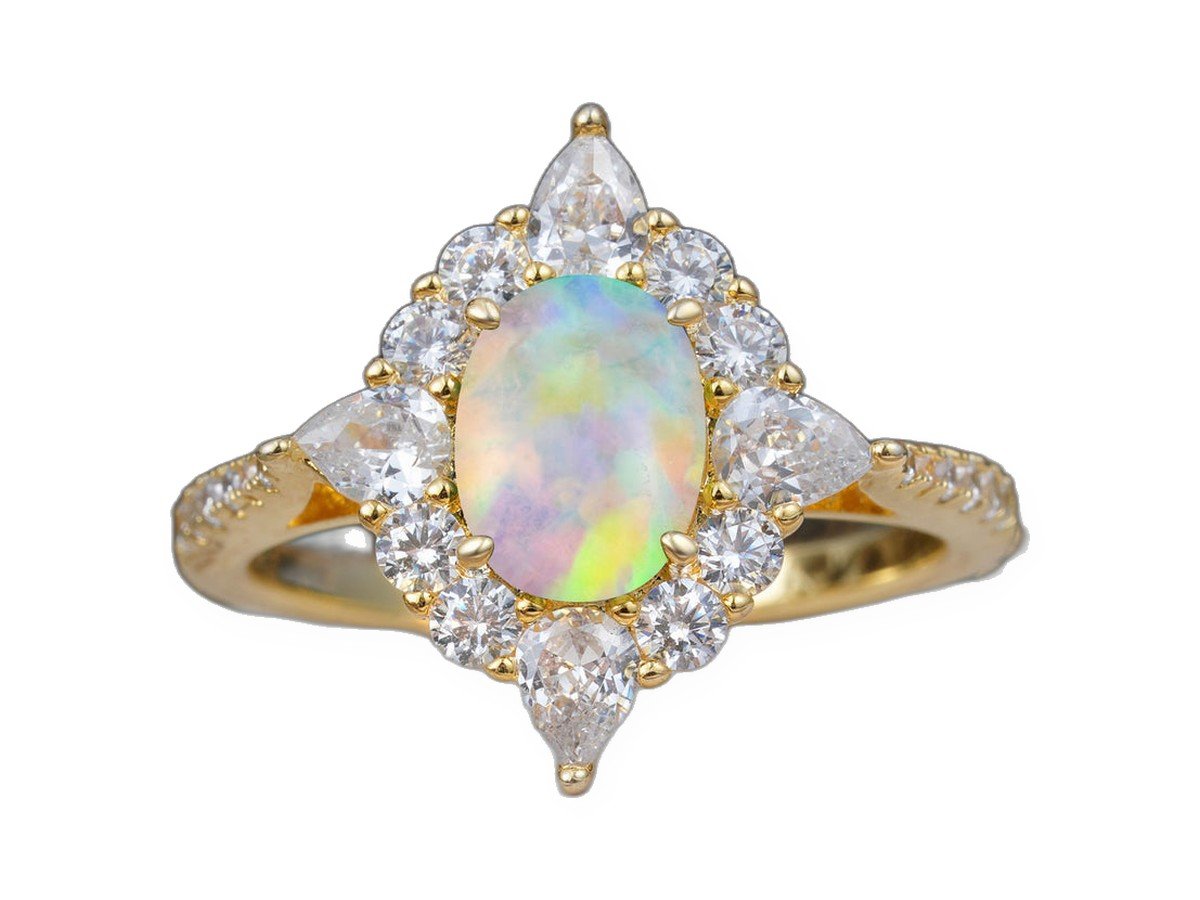
- Halo settings surround the centre stone with a ring of small, harder accent stones (often diamond or moissanite). The halo takes many of the side knocks before they reach the softer centre.
- Low or flush settings keep the stone closer to the finger, so it is less likely to catch on fabric or hit a surface.
- Tall four-prong or six-prong solitaires show off the stone beautifully but leave its edges exposed. For a soft stone, they are the riskiest choice.
- Small centre stones are easier to protect. A 3 mm accent stone in a band is far less vulnerable than a large oval sitting high above the finger.
Metal choice: what changes with silver, 10K, 14K and 18K gold
The metal affects price, colour, how the ring wears and how well it holds the stone over time. Here is what each option means in practice.
| Metal | What it is | Wears like | Good to know |
|---|---|---|---|
| Sterling silver | 92.5% silver alloy | Softest; scuffs and can bend | Tarnishes; prongs may need checking sooner. Budget-friendly way to try a style |
| 10K gold | 41.7% gold | Hardest gold option; resists scratches | Paler colour; a small number of people react to the higher alloy content |
| 14K gold | 58.3% gold | Good balance of colour and durability | The most common choice for engagement rings in the US |
| 18K gold | 75% gold | Richer colour, softer | Shows scratches sooner; holds value better |
| Platinum | About 95% platinum | Dense; develops a matte patina | Very secure for prongs; usually the most expensive |
White gold is usually plated with rhodium for its bright white colour. That plating wears through over time, so expect a re-plating every year or two if you want it to stay icy. Yellow and rose gold do not need plating.
If you are buying a ring to wear every day, 14K is a sensible default. If your budget is tight and the ring is for occasional wear, sterling silver lets you enjoy a design for far less, as long as you accept it will need more upkeep.
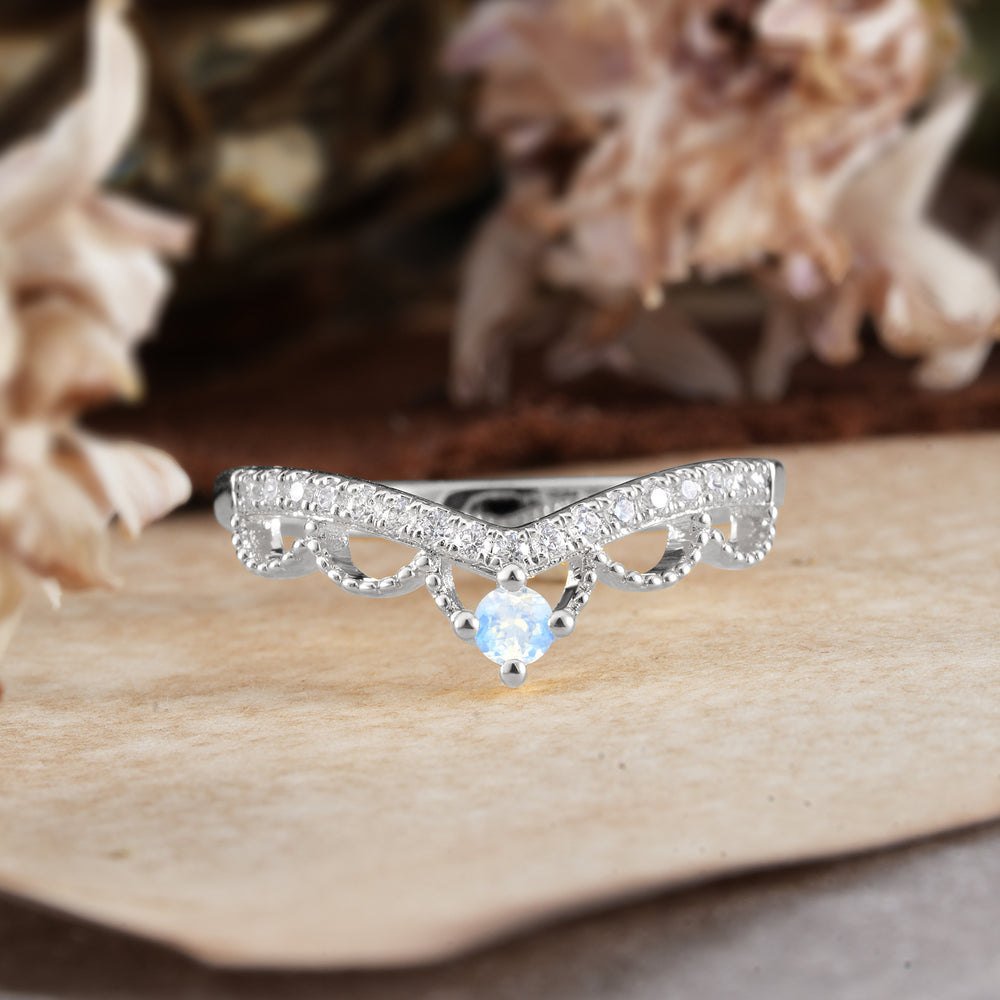
The same moonstone band in two metal colours. Product photos: Romalar Jewelry
Sizing a ring you are buying online
Most gemstone rings are made to order, which makes a wrong size more expensive to fix than a pair of jeans. A few rules make online sizing far more reliable.
- Measure at the end of the day, when your fingers are at their largest, and at room temperature. Cold fingers shrink; hot, humid days make them swell.
- Use a ring you already wear on the same finger. Measure its inside diameter in millimetres with a ruler and compare it against the seller’s size chart. This is more accurate than wrapping string or paper around your finger.
- Check the knuckle. If your knuckle is much wider than the base of your finger, choose a size that slides over the knuckle with a little resistance.
- Go up a quarter or half size for wide bands. Bands wider than about 6 mm feel tighter than thin ones in the same size.
- Ask about resizing before you buy. Bands set with stones all the way around (full eternity styles) usually cannot be resized at all.
Everyday care that keeps soft stones looking new
- Put rings on last and take them off first. Apply hand cream, perfume, sunscreen and hairspray before you put the ring on, especially turquoise and opal.
- Take it off for the gym, gardening, cleaning, cooking with raw dough, swimming pools and hot tubs. Chlorine and household chemicals are hard on both stones and gold alloys.
- Clean with warm water, mild soap and a soft brush. GIA advises against ultrasonic and steam cleaners for opal, moonstone and turquoise. Dry gently with a soft cloth.
- Store rings separately. A diamond or moissanite ring tossed in the same pouch will scratch an opal.
- Avoid heat and sudden temperature swings for opal: no saunas, no washing up in very hot water.
- Get the setting checked once a year. A loose prong is the most common reason a stone is lost, and it is cheap to fix before it fails.
Where Romalar Jewelry fits
Romalar Jewelry is a made-to-order jeweller with a large catalogue of gemstone rings. When we checked, its store listed dozens of opal designs plus moissanite, lab diamond, turquoise, moss agate, moonstone, peridot and aquamarine rings, most of them in halo, bridal-set and vintage-inspired styles. Each ring is offered in yellow, rose or white colour and can be ordered in different metals.
Some example prices from the US store on 13 November 2026:
| Ring | Centre stone | Listed price (USD) |
|---|---|---|
| Princess Queen Crown Tiara band (moonstone or moss agate) | 2.8 mm round, about 0.08 ct, with 17 moissanite accents | $250.00 in sterling silver |
| Dazzling Kite Cut Turquoise Engagement Ring | Kite-cut turquoise | $307.30 |
| Luxury Oval Cut Halo Pave Fire Opal Engagement Ring | Oval fire opal with pave halo | $485.77 |
| Princess Cut Opal Half Eternity Halo Ring | 6 x 6 mm opal, about 1.2 ct, 40 moissanite accents | $594.71 |
On the crown band listing, the metal selector added $256 for 10K gold, $448 for 14K gold and $576 for 18K gold on top of the sterling silver price. Other listings may show different upgrade prices, so check the total after you pick a metal.
What stood out to us for this guide:
- Protective designs are easy to find. Many of the opal and moonstone rings use halos of moissanite accents, which is exactly the kind of setting that shields a softer centre stone.
- The same design comes in several stones. The crown tiara band, for example, is offered in moonstone, moss agate, black onyx and black rutilated quartz, so you can choose the stone that suits your routine without giving up the design.
- Lifetime care service. Romalar’s policy describes lifetime maintenance for its rings, including re-setting loose stones, replacing missing stones where possible, re-plating and cleaning. You pay shipping to send the ring in, and Romalar covers return shipping; some repairs may carry a charge that is quoted first.
The honest drawbacks
- Made to order means waiting. The product pages list 6 to 8 business days of production plus 5 to 7 business days of shipping for normal orders in the US. Faster rush production is available for a fee.
- Changing your mind gets expensive quickly. According to Romalar’s policy, standard orders can be cancelled free only within 8 hours. After that, a 35% cancellation fee applies within 3 days and 60% after that, and modifications carry fees too. Product pages mention 30-day exchanges and refunds, but the full-refund section of the policy focuses on manufacturing faults, so read the Exchange & Refund Policy before you order.
- Duties are on you outside the US. The listings state that customs duties and taxes are the recipient’s responsibility.
- Metal details live in the option selector. The product descriptions focus on stone specifications, so confirm metal, colour and size on the order summary before paying.
How to order and save at Romalar
- Choose the stone for your routine first, using the table above, then the design.
- Pick metal and colour. For daily wear, 14K is a good default; sterling silver keeps the price lowest.
- Confirm your ring size with the measuring method above and the size chart on the product page.
- Double-check everything within the first 8 hours, while changes are still free.
- Add the code HAPPYSAVE at checkout for 20% off. Site-wide sales may run at the same time; the checkout will usually accept one discount, so compare the totals.
On the $250 sterling silver crown band, HAPPYSAVE would bring the price down to about $200 before any taxes or duties. On a 14K version of the same ring, the saving is roughly $140. If you are deciding between moonstone and moss agate in that design, choose moss agate for daily wear and moonstone for a ring you wear more carefully.
Browse gemstone rings at Romalar – code HAPPYSAVE for 20% off
Whichever stone you choose, the rule of thumb is the same: harder stones forgive you, softer stones reward a protective setting and a few good habits. Get those right and an opal or moonstone ring can look lovely for many years.
Sources (checked 13 November 2026): GIA Gem Encyclopedia entries and care guides for opal, moonstone, turquoise, chalcedony and moissanite (gia.edu); Romalar Jewelry product pages for the Princess Queen Crown Tiara rings, Dazzling Kite Cut Turquoise Engagement Ring, Luxury Oval Cut Halo Pave Fire Opal Engagement Ring and Princess Cut Opal Half Eternity Halo Promise Ring (romalarjewelry.com); Romalar Returns & Repairs Policy (romalarjewelry.com/policies/refund-policy). Gold purity percentages follow standard karat definitions. Discount code provided through Romalar’s affiliate program.