
Disclosure: This guide contains one affiliate link and a discount code. If you buy through them, She Chooses Well may earn a commission at no extra cost to you. Prices were checked on Merino.tech’s US store on 13 November 2026 and are in USD.
Staying warm in winter isn’t about owning the thickest coat. It’s about layering: a few well-chosen pieces that trap warm air, move sweat away from your skin and can be adjusted as you go from a cold street to a heated office or a steep walk. Get the layers right and you can wear a lighter coat, feel less bulky and stay comfortable all day.
This guide explains the three-layer system, why the base layer matters most, how merino wool compares with synthetic and cotton, what fabric weights like 165 or 250 actually mean, and how to build outfits for city days, winter walks and travel.
Why women often feel the cold more
If you’re always the one reaching for a cardigan in the office, you’re not imagining it. On average, women have a lower resting metabolic rate and often a smaller body size than men, which affects how much heat the body produces, and many women notice that their hands and feet feel cold first. Office temperatures have historically been set with men’s metabolic rates in mind. Layering gives you control: a thin base layer under work clothes can make a cold office comfortable without anyone noticing you’re dressed for winter.
The three-layer system
| Layer | Job | Good options |
|---|---|---|
| Base layer | Sits next to skin; moves moisture away and adds a first layer of warmth | Merino wool, synthetic performance fabric |
| Mid layer | Traps warm air; the main insulation | Fleece, wool sweater, lightweight down or synthetic insulated jacket |
| Outer layer | Blocks wind, rain or snow | Wool coat for the city; waterproof or windproof shell for outdoors |
The magic of layering is flexibility. Too warm on a busy train? Open or remove the mid layer. Wind picks up on a walk? Add the shell. A single heavy coat can’t do that.
Why the base layer matters most
When you move, you sweat, even in winter. If that moisture stays against your skin, it chills you as soon as you stop moving. A good base layer moves moisture away and keeps insulating even when slightly damp. This is why cotton is a poor base layer for active cold days: it absorbs moisture, holds onto it and loses most of its warmth when wet.
What about blends?
Many base layers blend merino with nylon or elastane. A small percentage of synthetic fibre adds strength and stretch, which helps fine knits resist holes and keep their shape. The trade-off is slightly less odour resistance and a less “natural” feel. For everyday wear and travel, 100% merino feels luxurious and breathes beautifully; for hard-wearing outdoor use, a merino-nylon blend can last longer. Neither choice is wrong. Check the label so you know which you’re buying, and compare prices on a like-for-like basis.
Merino vs synthetic vs cotton
| Merino wool | Synthetic (polyester/nylon) | Cotton | |
|---|---|---|---|
| Warm when damp | Yes | Fairly | No |
| Odour resistance | Excellent; can be worn several times between washes | Poor; tends to hold odour | Moderate |
| Drying speed | Moderate | Fast | Slow |
| Durability | Good, but finer knits can get small holes over time | Very durable | Good |
| Temperature range | Wide; comfortable from cool to cold, breathable when warm | Can feel clammy when you stop moving | Comfortable only when dry and inactive |
| Price | Higher | Lower | Lowest |
For most women layering for everyday winter life and travel, merino is the most versatile choice: it’s warm, comfortable on its own as a top, and doesn’t smell after a day’s wear. Synthetics are great for intense, sweaty activity where fast drying matters most.
What “fine” merino means, and why it isn’t itchy
Wool’s itchiness comes from thick fibres pressing into the skin. Merino fibres are much finer than traditional wool, measured in microns (thousandths of a millimetre). Fibres below roughly 20 microns are generally considered soft enough to wear next to skin, and lower numbers feel softer. If regular wool sweaters make you itch, fine merino is often a pleasant surprise. People with true wool allergy should still be cautious.
Fabric weight: 150, 165, 250 and beyond
Merino garments are often labelled with a fabric weight in grams per square metre (gsm). It’s the easiest way to choose warmth:
Merino for sleep and everyday comfort
Merino’s ability to regulate temperature makes it popular beyond winter sports. Many people find a lightweight merino top comfortable to sleep in, because it stays warm without becoming clammy if they heat up during the night. It’s also useful during seasonal changes, when mornings are cold and afternoons warm. A lightweight merino tee under a shirt or jacket adapts better to these swings than a heavy cotton sweatshirt.
How warm should you dress? A quick guide
| Conditions | Base | Mid | Outer |
|---|---|---|---|
| Cool and dry, mostly indoors | Lightweight | Cardigan or light sweater | Light coat |
| Cold, walking around town | Midweight | Wool sweater or fleece | Wool coat, scarf, beanie |
| Freezing, wind or snow, outdoors | Midweight top and leggings | Insulated jacket or fleece | Windproof/waterproof shell, gloves, gaiter |
Fit: how a base layer should feel
- Close but not tight. A base layer works best when it touches your skin so it can move moisture, but it shouldn’t restrict movement or dig in.
- Long enough in the body and sleeves so your lower back and wrists stay covered when you reach or bend.
- Flat seams avoid chafing under backpack straps and bra bands.
- Thumbholes and half-zips are useful for active days; plain crew necks look better as everyday tops.
Three outfits built on a base layer
City commute
Lightweight or midweight merino long sleeve, a fine-knit sweater or cardigan, a wool coat and a scarf. Remove the sweater in heated offices and you’re still wearing a smart, odour-resistant top.
Winter walk or hike
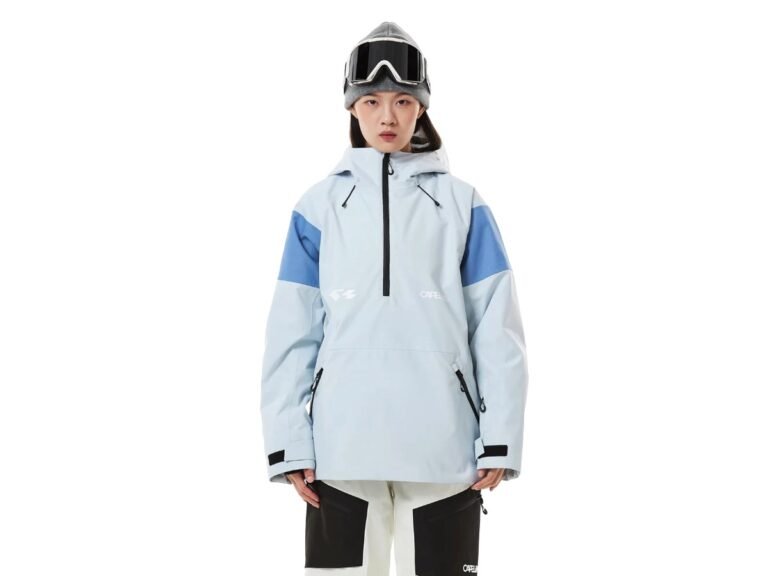
Midweight merino top and leggings, a fleece mid layer, a windproof or waterproof shell, plus a beanie and neck gaiter. Start slightly cool; you’ll warm up within ten minutes.
Travel
Two merino tops can cover a week: wear one, air the other overnight. A merino tank or tee under a shirt doubles as sleepwear on cold nights.
Don’t forget legs, hands, head and feet
Most people layer their top half carefully and forget the rest. Cold legs and feet make you feel cold all over, however good your jacket is.
- Base layer leggings under jeans or trousers make a huge difference on cold commutes and winter walks. Midweight merino leggings are thin enough to fit under most trousers.
- Socks: merino or merino-blend socks keep feet warmer and drier than cotton. Avoid wearing two pairs of thick socks in snug boots; squeezed feet get colder because circulation is restricted.
- Head and neck: a beanie and a neck gaiter or scarf are the cheapest way to feel much warmer. A gaiter is easier than a scarf for active days because it stays in place.
- Hands: thin liner gloves under warmer gloves or mittens let you use your phone without exposing bare skin. Mittens are warmer than gloves for the same thickness.
Six layering mistakes
- Cotton next to skin on active days. It gets damp, stays damp and chills you when you stop.
- Too many thick layers. Bulk restricts movement and can compress insulation so it works less well.
- Starting warm. If you’re cosy standing at the door before a brisk walk, you’ll be sweaty in ten minutes. Start slightly cool.
- Not venting. Open zips and cuffs as you warm up rather than waiting until you’re sweating.
- A tight outer layer. Your coat should fit comfortably over your mid layer; tight coats squash insulation.
- Ignoring wind. On exposed days, a thin windproof layer adds more warmth than another sweater.
Ethics and sustainability in merino
Merino is a natural, renewable and biodegradable fibre, and long-lasting garments that need less washing can reduce overall impact. There are also welfare questions to be aware of. Mulesing, a procedure used on some merino sheep farms to prevent flystrike, is controversial, and many brands now state whether their wool is mulesing-free or certified under schemes such as the Responsible Wool Standard (RWS) or ZQ. If animal welfare matters to you, look for a clear statement on the brand’s website or ask customer service before buying.
Is merino worth the price?
Merino base layers cost more than synthetic or cotton tops. The value comes from how often you wear them: a midweight merino long sleeve can be a ski base layer, a hiking top, a travel shirt and an everyday winter top under a cardigan. Because it resists odour, you can wear it several times between washes, which also helps it last. If you’d only wear it a handful of times a year, a cheaper synthetic layer may be the better buy. If you’d reach for it every cold day, merino usually earns its price.
Caring for merino
- Wash less often. Airing merino overnight is often enough between wears.
- Wash cold, inside out, on a gentle cycle with a mild or wool-specific detergent.
- Lay flat to dry. Tumble drying can shrink or felt wool.
- Store clean and dry, ideally in a sealed container in summer to protect against moths.
A closer look: Merino.tech
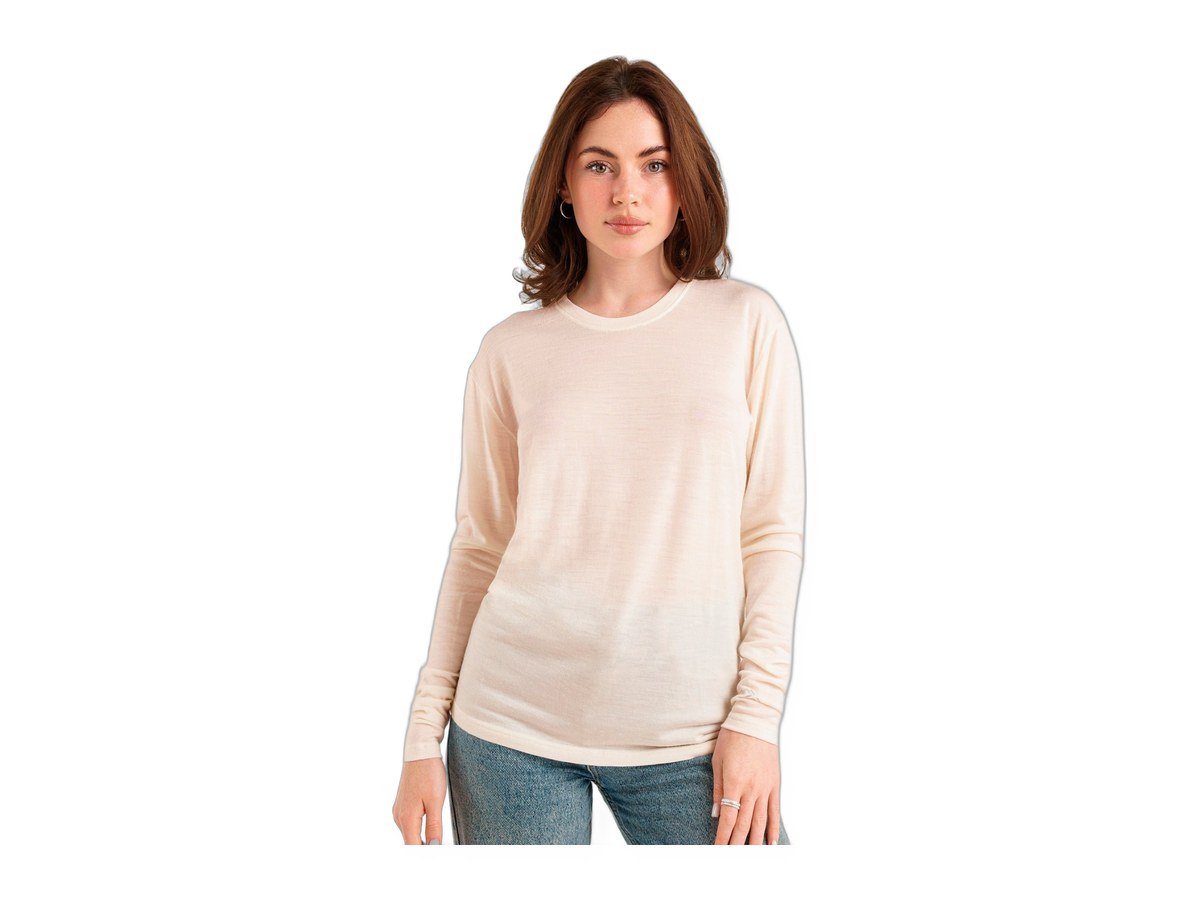
Merino.tech is a merino clothing brand focused on base layers and everyday basics, with a dedicated women’s range of tees, tanks, long sleeves, half-zips and thermal sets. According to the brand, it uses 17.5-micron Australian merino, and its product pages list fabric weights clearly, from lightweight 165 to heavyweight 320.
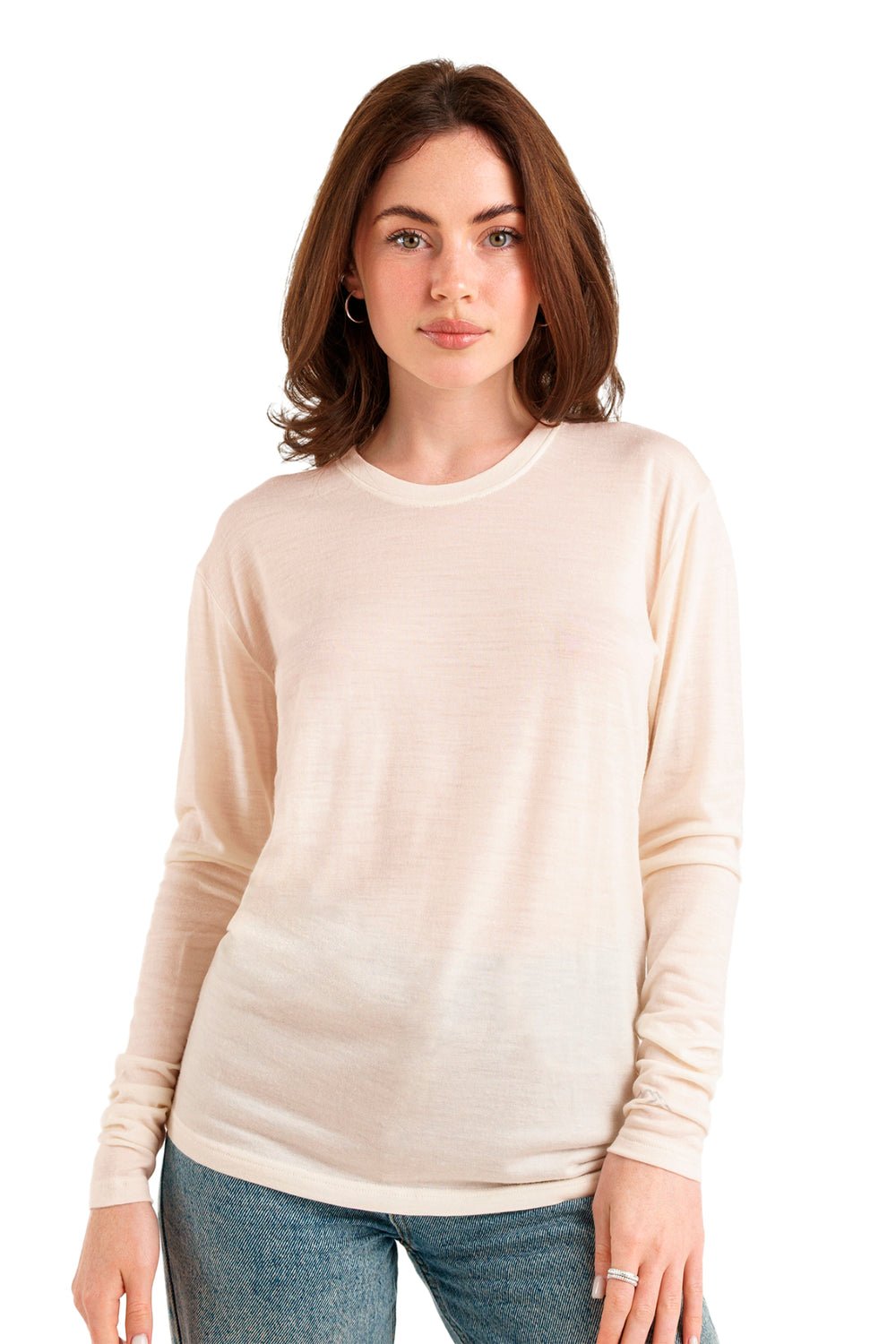
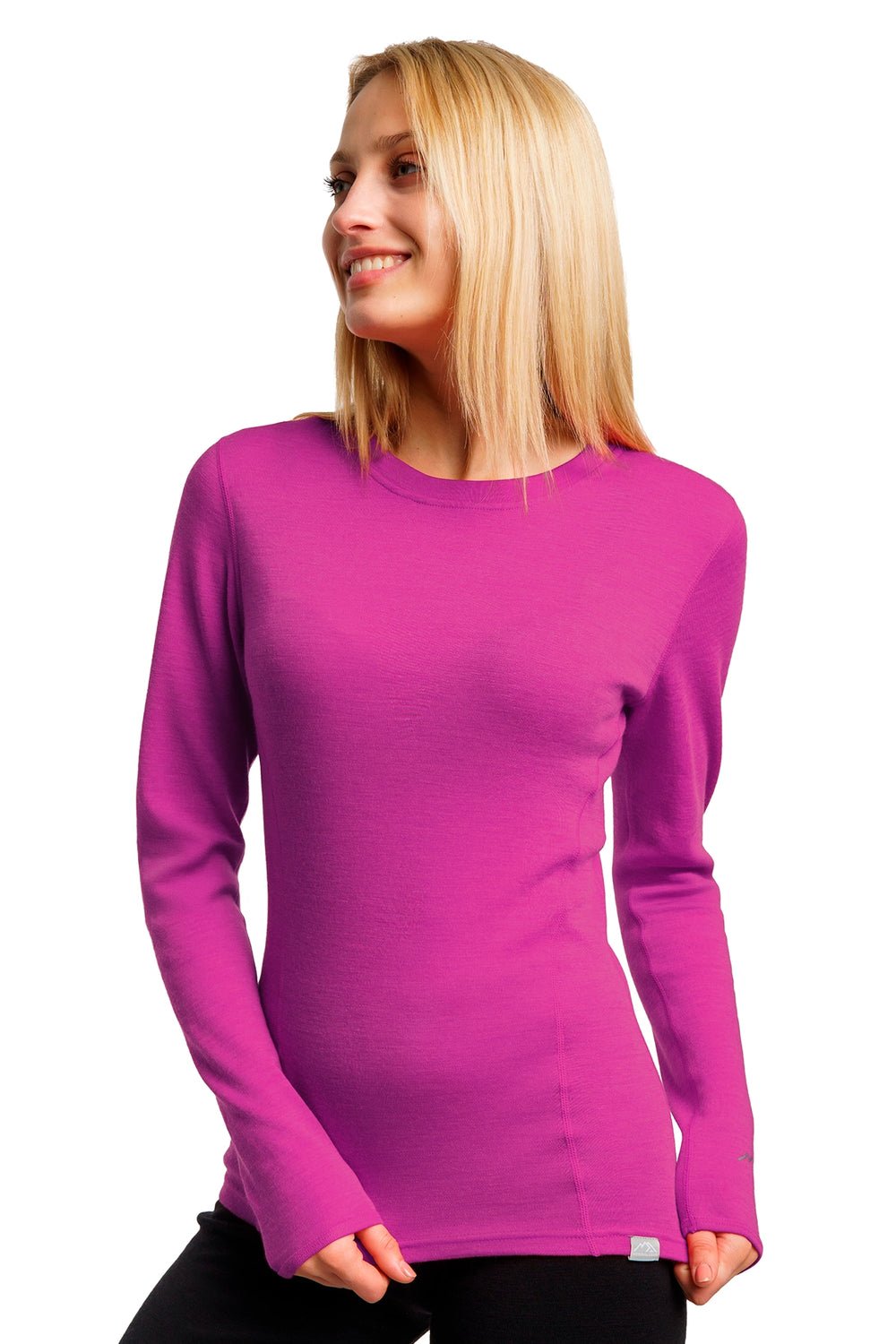
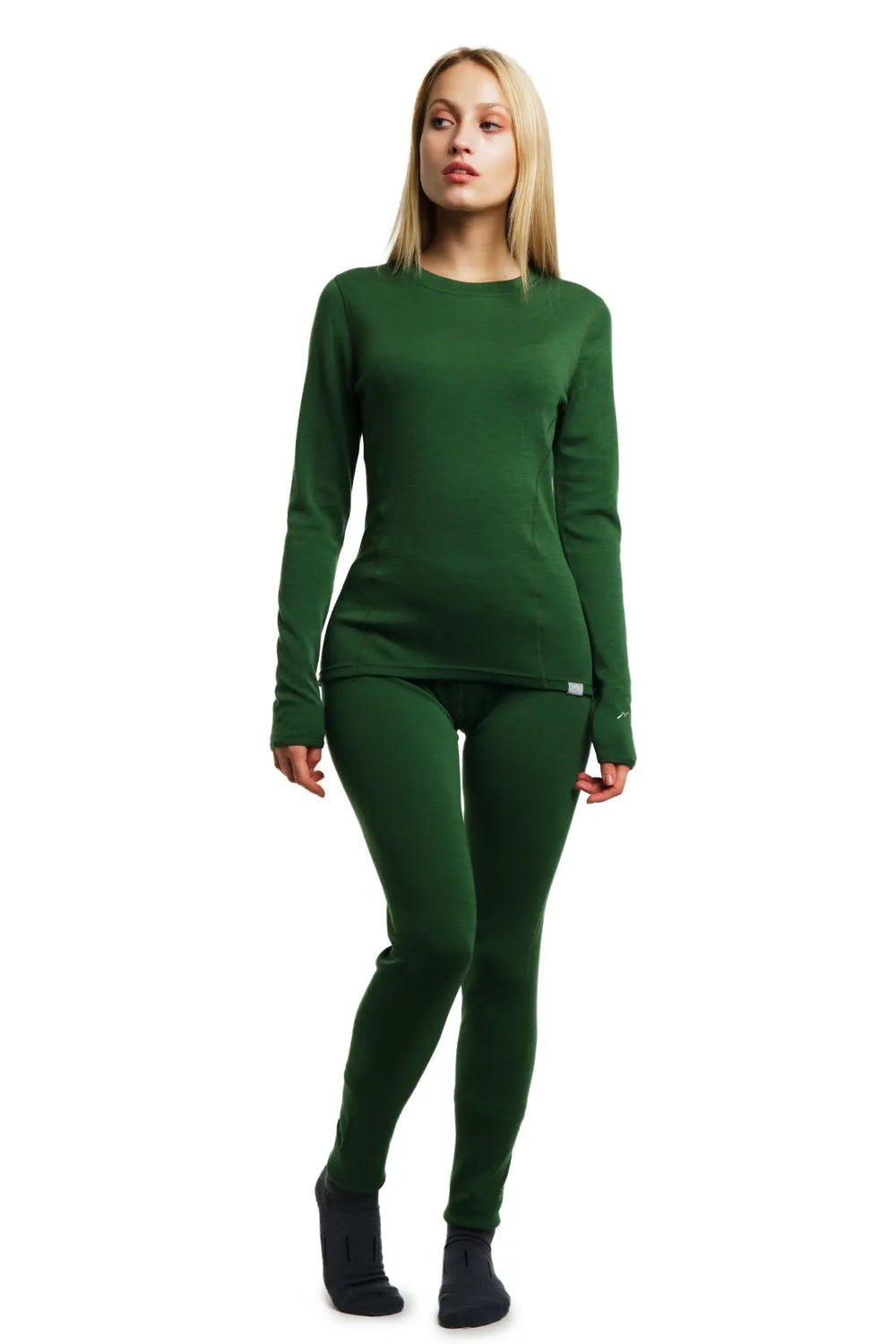
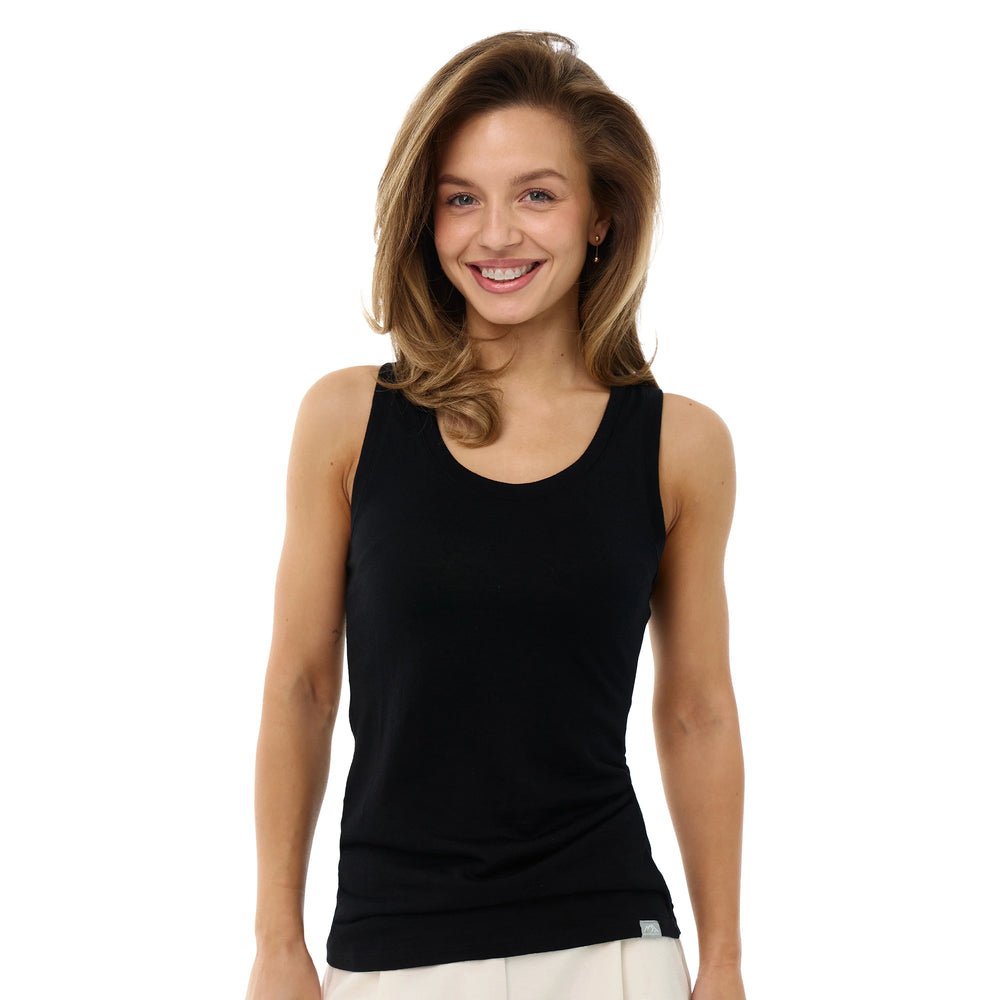
Images: Merino.tech
| Women’s product | Weight / use | Price (USD) |
|---|---|---|
| Merino Long Sleeve 165 | Lightweight; layering, active days, travel | $49.99 |
| Merino Long Sleeve 250 | Midweight, 100% merino; everyday winter base layer | $59.95 |
| Merino Half Zip Long Sleeve 250 | Midweight; easy venting on walks | $59.99 |
| Merino Thermal Set 250 | Top and bottoms; cold-weather base layer set | $99.99 |
| Merino Wool Set 250 + Beanie & Gaiter | Full cold-weather kit | $114.99 |
| Merino Wool Basic Tank Top | Layering or warm-weather wear | $44.99 |
Things to know before ordering
- Shipping: $5.99 on US orders up to $49.98, free from $49.99.
- Returns: 30 days from delivery for unused items, with one prepaid return label per order. For purchases made between 1 November and 31 December 2026, Merino.tech extends returns until 31 January 2027 (or 30 days from delivery, whichever is later).
- Care: Merino.tech recommends washing inside out on a cold, gentle cycle with mild or wool-specific detergent and laying flat to dry.
- Sizes: women’s styles generally run S–XL, with some styles from XS to XXL. Check the size chart, as base layers are meant to fit close.
How to buy and save at Merino.tech
- Use the code REBECCA10 at checkout for 10% off.
- Start with one midweight long sleeve in your size; it’s the most versatile piece and qualifies for free US shipping on its own.
- Consider a set if you know you’ll want leggings too; sets often work out cheaper than buying pieces separately.
Enter REBECCA10 in the discount field and confirm the total on the order summary.
Shop Merino.tech base layers – code REBECCA10 for 10% off
Sources (checked 13 November 2026): Merino.tech women’s product pages for long sleeves, half-zip, thermal sets, wool sets and tank tops, including fabric weights, micron information and care instructions; Merino.tech Shipping Policy and Return Policy (merino.tech). General layering and fibre information reflects standard outdoor clothing guidance.