

Disclosure: This guide contains one affiliate link. If you buy through it, She Chooses Well may earn a commission at no extra cost to you. Prices were checked on Huug’s US store on 13 November 2026 and are in USD.
The wire-free bra has gone from “the comfy one I wear at home” to the only bra many women own. That shift makes sense: underwire can dig, poke and leave marks by the end of the day. But anyone who has switched knows the trade-off. Some wireless bras feel like a flimsy crop top that does nothing; others promise support and deliver a uniboob or straps that slide off by lunchtime.
Support without wires is absolutely possible. It just comes from different places. This guide explains where a wireless bra gets its lift and shape, which construction details actually matter, how to size one (letter sizes work differently from band-and-cup sizes), which style suits which outfit, and how to make a good one last.
Where support comes from when there’s no wire
An underwire bra uses a rigid frame to anchor each cup to your ribcage. A wireless bra has to spread that job across several other parts:
- The band. Just like in an underwire bra, the band does most of the lifting. In a wireless bra it’s even more important. A wide, firm band that stays level all the way around is the single best sign of a supportive wireless style.
- Cup structure. Moulded foam, bonded mesh layers, seamed cups or internal slings give the bust shape and stop it from flattening. No structure at all means a compressed, “sports bra” look.
- Side panels and a centre gore. Firm side panels pull tissue forward; a centre section that separates the cups prevents the uniboob effect.
- Fabric tension. Higher-recovery fabrics hold their shape across the day. Very soft, stretchy fabrics feel lovely at 8am and slack by 4pm.
- Straps. Wider straps spread the load and are less likely to dig. Adjustable straps let you fine-tune lift.
Construction details to look for
Moulded foam vs bonded mesh vs unlined
Moulded foam cups give the smoothest, most rounded shape and the most coverage, but can feel warm and bulky. Bonded mesh or thin layered pads offer shaping with less bulk and better breathability. Unlined, single-layer cups look the most natural and feel lightest, but provide the least shaping and coverage. Many people end up owning one of each for different outfits.
Removable vs fixed pads
Removable pads let you adjust shape, but they shift in the wash and can fold inside the bra. Fixed, non-removable pads stay put and dry flat. If you’ve ever fished a pad out of the washing machine, you’ll understand the appeal.
Seamless vs seamed
Seamless knits and bonded edges disappear under fitted tops and t-shirts. Seamed cups can give more lift and shape for fuller busts but may show under thin fabrics.
Hardware
Hooks, sliders and rings can press into skin when you lie down or lean back against a chair. Pull-on styles with no hardware are the most comfortable for lounging and travel, while hook-and-eye bands are easier to adjust as the band stretches over time.
Why so many women are switching
The move away from underwire isn’t only about comfort trends. Many women spend more time at home or in flexible workplaces, and want clothes that feel good for twelve hours, not just look good for two. Bra technology has also improved: bonded fabrics, laser-cut edges and moulded mesh now give shape that used to require wires and foam. For a lot of people, the result is a bra they forget they’re wearing, which is the whole point of everyday underwear.
That doesn’t mean every wireless bra is better than every underwire bra. It means the category now covers a real range, from barely-there bralettes to genuinely structured everyday bras, and choosing well comes down to construction rather than the “wireless” label.
Sizing a wireless bra
Many wireless bras use letter sizes (XS–XXL) rather than band-and-cup sizes. That makes them easier to buy, but it means each size covers a range of bodies, so a good fit takes more care:
- Measure your underbust snugly, and your bust at the fullest point, with a soft tape and without a padded bra on.
- Use the brand’s own size chart, not your usual letter size from other brands. Most charts list a band and bust range for each size.
- If you’re between sizes, decide by your priority: the smaller size for more support, the larger size for more comfort. For fuller busts, support usually wins.
- Check the fit at home: the band should sit level and feel firm but comfortable; the cups should contain all tissue without gaping or spilling; the centre should sit close to your chest.
- Do a movement test. Raise your arms, twist and bend forward. The band shouldn’t ride up and the cups shouldn’t shift.
Which wireless style for which outfit
| Style | Neckline | Best under | Support level |
|---|---|---|---|
| Scoop | Rounded, moderate coverage | T-shirts, crew necks, knitwear | Good everyday support |
| Plunge | Deep V | V-necks, wrap tops, button-downs worn open | Moderate; depends on cup structure |
| Racerback | High, straps meet at centre back | Tank tops, athletic wear | Higher; straps don’t slip |
| Bralette | Varies, often lace | Relaxed outfits, layering | Light; best for smaller busts |
| Bra tank / built-in bra top | Tank with internal support | Worn alone or under open layers | Light to moderate |
Colour: the detail that makes a bra disappear
The most “invisible” bra under a white or light shirt isn’t white: it’s a shade close to your own skin tone. White fabric shows through light clothing, while a nude that matches your skin blends in. If your brand offers several neutral shades, choose the one closest to your skin, and keep black or bold colours for dark clothes or for when you want the bra to be seen.
Who wireless bras suit, and when to keep an underwire
- Great fit for: everyday wear, working from home, travel days, sensitive skin, post-surgery recovery (when your doctor says it’s appropriate), and anyone who finds wires painful.
- Consider keeping an underwire for: very fitted or structured outfits where you want maximum lift and separation, some formal wear, and high-impact exercise (choose a proper sports bra instead).
- Fuller busts: look for wide bands, firm side panels, adjustable straps and more structured cups. Not every wireless bra is designed for larger cup sizes; check the size chart’s upper bust range.
Common fit problems and what they mean
| Problem | Likely cause | Try |
|---|---|---|
| Band rides up at the back | Band too loose | Size down, or choose a style with a wider band |
| Straps keep slipping | Straps set too wide for your shoulders, or band too loose | Racerback or adjustable straps; check the band first |
| Spilling over the top or sides | Cups too small or neckline too low for your shape | Size up, or switch from plunge to scoop |
| Gaping cups | Cups too large or too structured for your shape | Size down, or try a softer, less shaped cup |
| Uniboob / flattened shape | Little cup structure or no separation at the centre | Styles with shaped pads and a defined centre |
| Red marks under the band by evening | Band too tight, or a narrow band digging in | Size up in the band, or choose a wider, softer band |
Wireless bras through different life stages
Bodies change, and so do bra needs. During pregnancy, many women find wire-free styles more comfortable as the bust grows and becomes tender; look for stretchy bands and adjustable straps, and size up as needed. While breastfeeding, dedicated nursing bras with clips are more practical. After weight changes or around menopause, breast shape and density can change, so a style that fitted well a few years ago may no longer suit. It’s worth re-measuring every year or so rather than buying the same size by habit. After breast surgery, always follow your surgeon’s guidance on when and what type of bra to wear.
Making a wireless bra last
- Rotate. Elastic recovers between wears. Two or three bras in rotation last far longer than one worn every day.
- Wash cool, in a lingerie bag, or hand wash. Close any hooks first.
- Skip the dryer. Heat breaks down elastane, which is what keeps the band firm.
- Dry flat or hang by the centre, never by the straps.
- Replace when the band loosens. If you’re on the tightest hook (or a pull-on band rides up), the support has gone.
A closer look: Huug wireless bras
Huug is a US-based brand focused on everyday wire-free bras, underwear and basics. Its core idea, according to the brand, is a bra with no wires, no foam and no hardware: the cups use what Huug calls EnMeshed Tech™, bonded mesh pads that are non-removable, breathable and quick-drying, designed to give structure and lift without the bulk of foam.
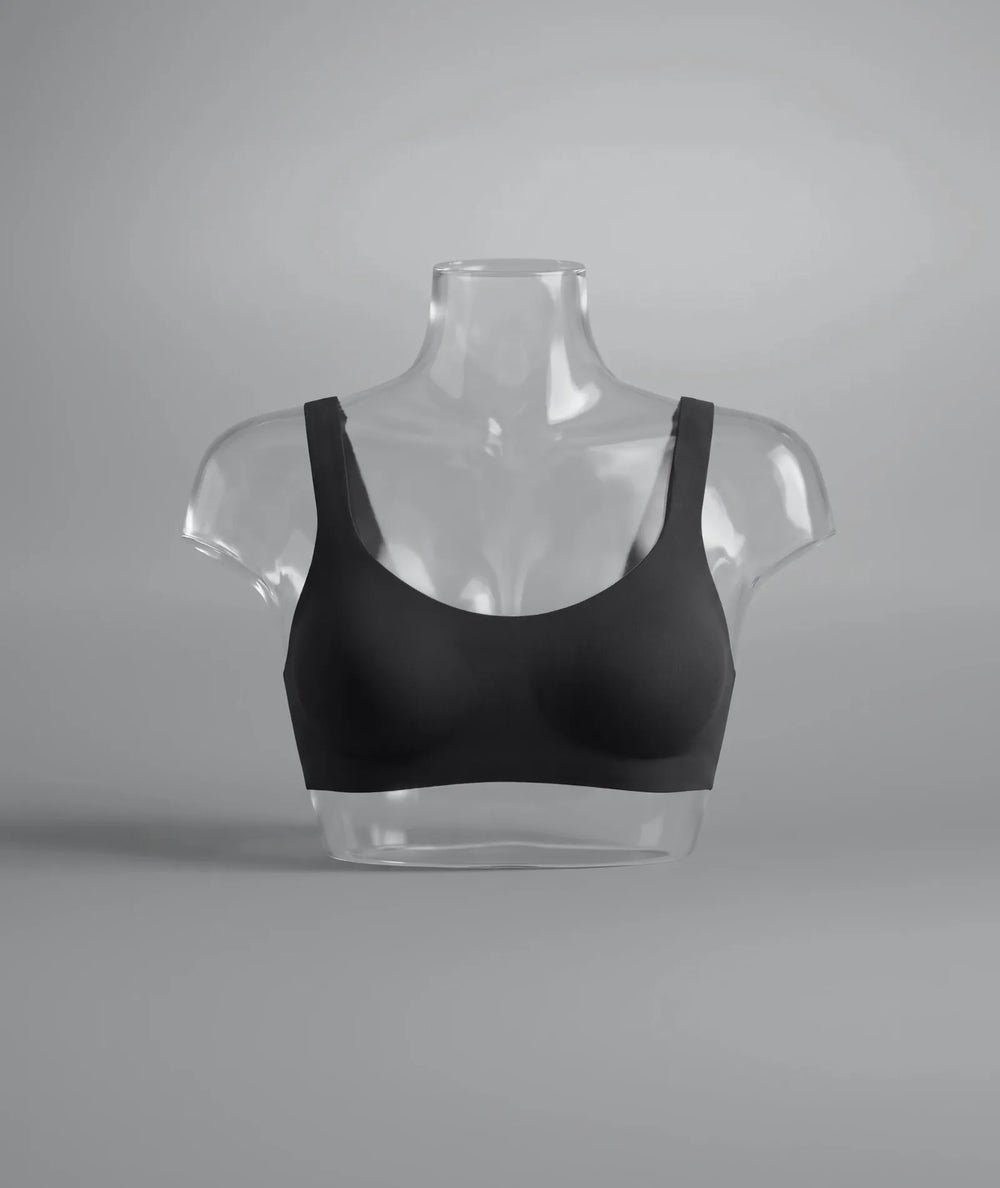
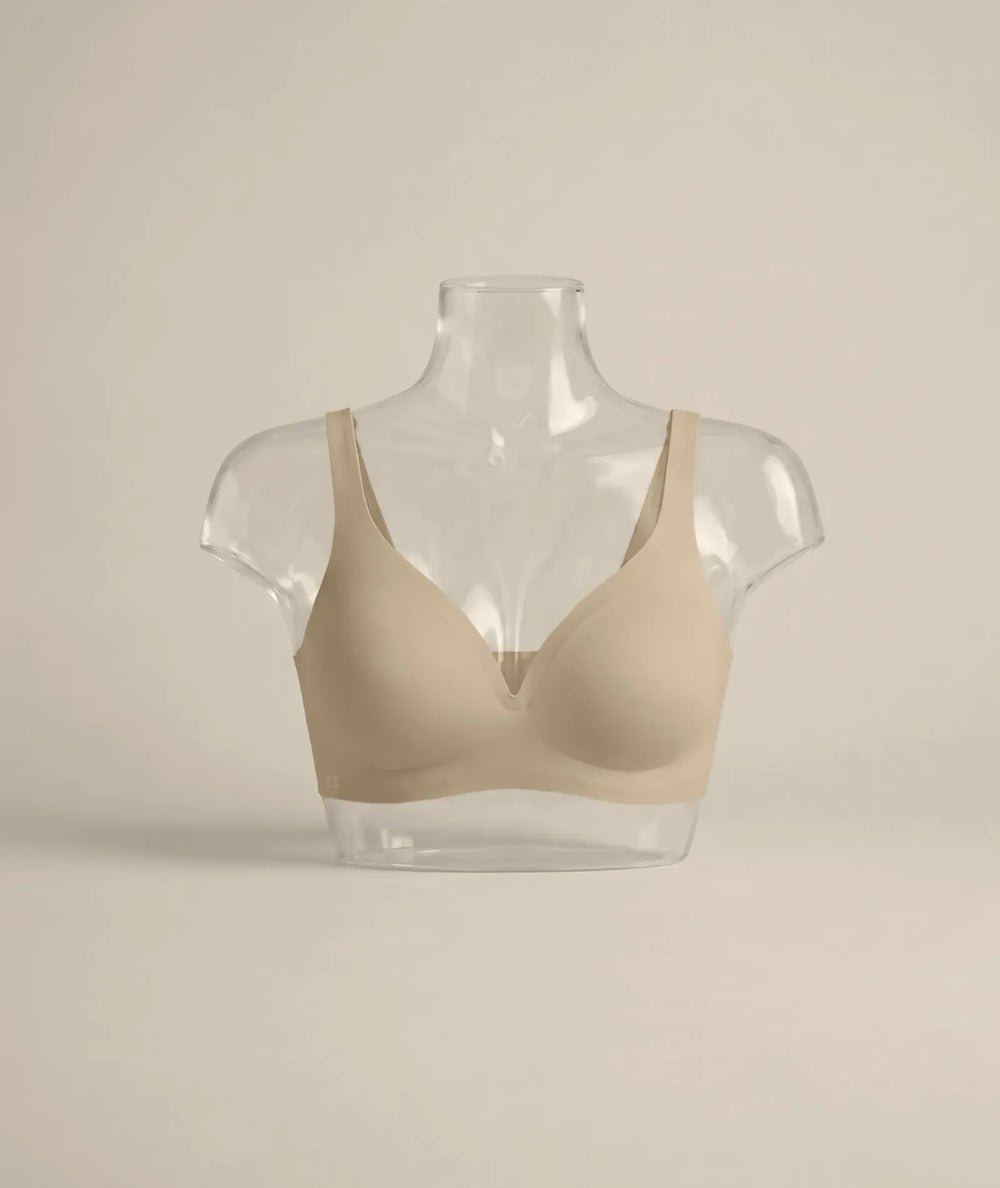
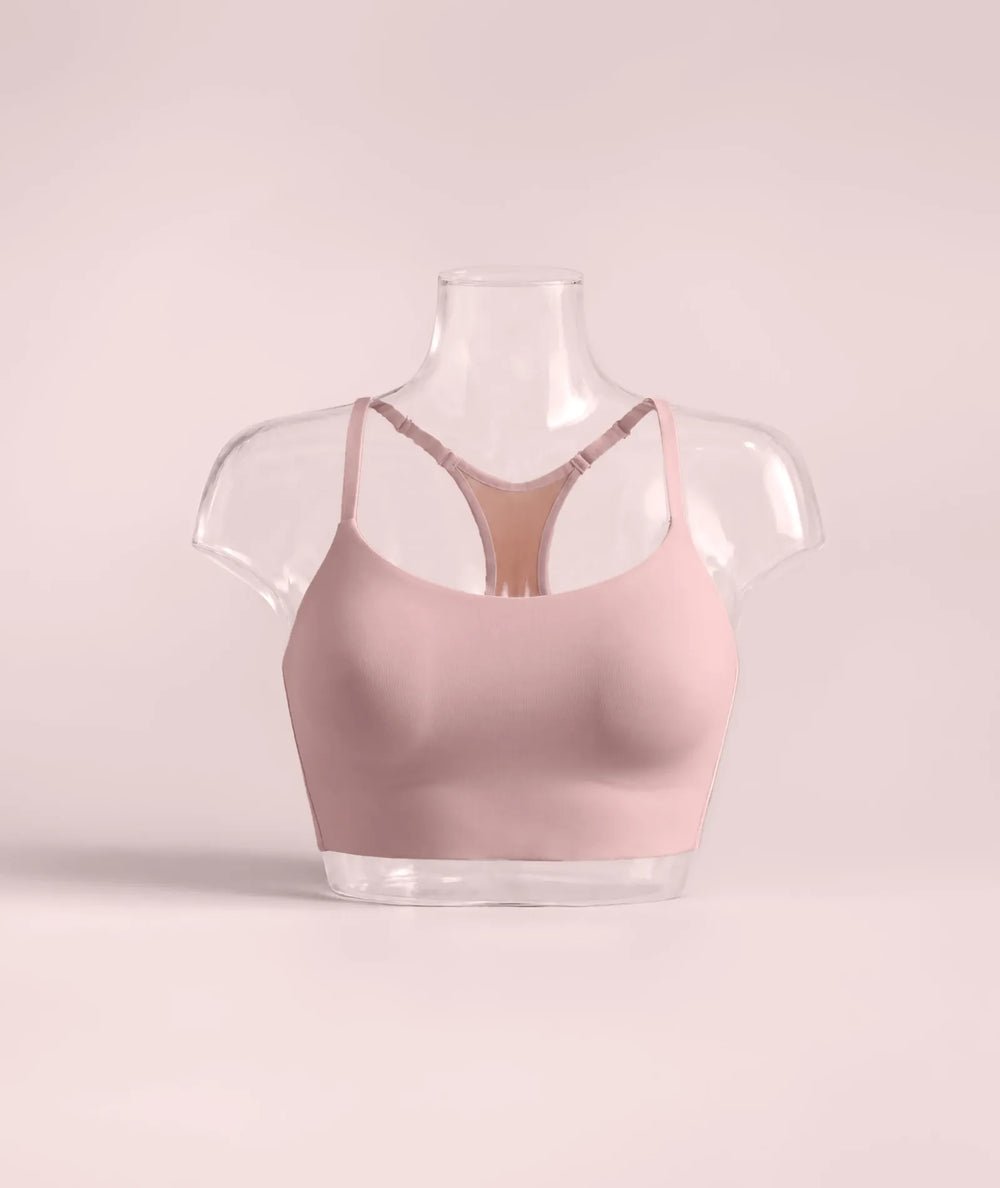
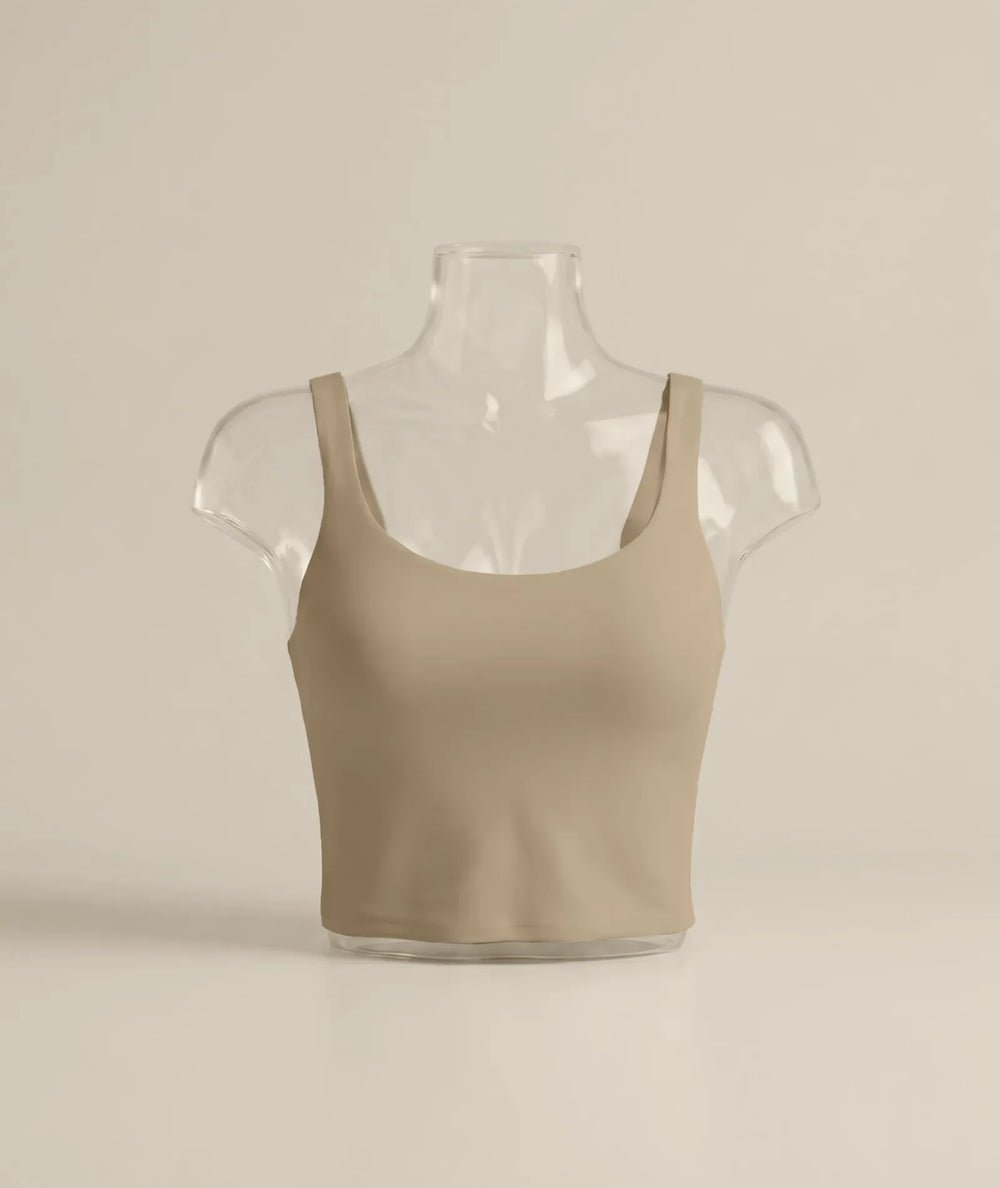
Images: Huug
| Style | What it’s for (per Huug) | Price (USD) |
|---|---|---|
| Daily Embrace | Everyday scoop-neck wireless bra with a seamless fit; also available in an adjustable-strap version | $54.40 (listed down from $68) |
| Daily Scoop | Scoop neckline for t-shirts and everyday tops | $54.40 (from $68) |
| Invisible Plunge | Deep V for low-cut tops and delicate fabrics | $57.60 (from $72) |
| Daily Racerback | Racerback straps for tanks and active days | $54.40 (from $68) |
| Bra Tank | Tank top with built-in support | $54.40 (from $68) |
Matched against the checklist above, the main strengths are the fixed, non-removable pads (no shifting in the wash), no hardware to press into skin, and a clear range of necklines for different outfits. Bras come in letter sizes from XS to XXL.
Things to know before ordering
- US only, for now. Huug currently ships to the contiguous United States only.
- Shipping options: standard (3–6 business days), 2nd Day Air ($15) and Next Day Air ($25); check the standard rate and any free-shipping offer at checkout.
- Returns: Huug offers free returns and exchanges within 30 days if you opt into its Checkout+ service at checkout. Without it, returns cost $9.95, though Huug says it still offers one complimentary exchange per customer. Items must be unwashed and unworn with tags.
- Letter sizing means checking the chart. Use your underbust and bust measurements, not the letter size you wear elsewhere.
- Pull-on design. No hooks means nothing to dig in, but also no way to tighten the band as it ages; choose the size that feels firm from day one.
How to buy and save at Huug
Huug didn’t have a public discount code for us when we checked, but its core bras were already marked down by around 20% (for example, the Daily Embrace at $54.40 instead of $68). A few ways to get the most out of an order:
- Measure first and order the size the chart recommends, then do the movement test at home with tags on.
- Consider Checkout+ if you’re unsure about sizing, since it makes returns and exchanges free within 30 days.
- Start with two necklines, such as a scoop for t-shirts and a plunge for V-necks, so you can compare fit and decide which to buy more of.
If you’re switching from underwire, give your new bra a week of normal wear before deciding. Comfort is immediate, but you’ll only see whether the support holds up across real days.
Sources (checked 13 November 2026): Huug product pages for Daily Embrace, Daily Scoop, Invisible Plunge, Daily Racerback and Bra Tank, including product descriptions and pricing (huug.com); Huug Shipping Policy and Returns policy (huug.com/policies).