

Disclosure: This guide contains one affiliate link. If you buy through it, She Chooses Well may earn a commission at no extra cost to you. Prices were checked on the Australian CRZ YOGA store on 13 November 2026 and are in AUD.
“Just wear leggings” is the advice every beginner gets before their first pilates, yoga or gym session. It’s not wrong, but it skips the part that matters: different workouts put very different demands on fabric. The buttery-soft pair that feels perfect in a slow yoga flow can turn see-through under gym lights, and the compressive pair you love for squats can feel like a wetsuit on a reformer.
This guide explains what each type of workout asks of your leggings, what the fabric labels actually mean, how compression and spandex percentages change the feel, and how to avoid the three classic mistakes: see-through fabric, rolling waistbands and early pilling. Then we map those needs onto one brand’s fabric collections so you can see how the theory translates into real products.
What each workout demands from your leggings
Pilates (mat and reformer)
Pilates involves a lot of lying on your back, rolling through the spine and working with your legs in the air. That changes the priorities:
- A flat, soft waistband. You spend a lot of time lying down, so a thick or bulky waistband, or a rigid back pocket, presses into your lower back.
- A close fit at the ankle. Instructors want to see knee and ankle alignment, and on a reformer loose hems can catch on straps and springs.
- Moderate compression. Enough to feel held, not so much that it restricts deep hip flexion.
- Grip on the carriage. Very slick fabrics can slide on the reformer carriage during side-lying work.
Yoga (including hot yoga)
- Maximum stretch and freedom. Deep lunges, wide-legged folds and binds need fabric that moves without pulling down at the back.
- Opacity under stretch. Downward dog is the ultimate see-through test.
- A high, stable rise so the waistband doesn’t roll in forward folds.
- For hot yoga: lightweight fabric that wicks sweat and doesn’t get heavy when wet. Cotton is a poor choice because it holds moisture.
Gym and strength training
- Squat-proof thickness. Deep squats stretch the fabric over the seat more than any other movement.
- Higher compression for a locked-in feel during lifts, lunges and jumps.
- Durability. Barbells, benches and rough flooring are hard on fabric, especially on the shins and seat.
- Pockets for phone, key card or locker key.
Reading the fabric label
Almost all performance leggings are a blend of a base fibre plus elastane (also called spandex or Lycra, which is a brand name for elastane). The ratio and the finish tell you most of what you need to know.
| Label | What it means for you |
|---|---|
| Polyamide / nylon | Smooth, strong, soft against skin. Common in premium leggings. Generally more abrasion-resistant than polyester at similar weights. |
| Polyester | Durable and quick drying, often cheaper. Can feel less soft and hold odour more than nylon. |
| Elastane / spandex / Lycra | Provides stretch and recovery. Below roughly 15% feels relaxed; 18–25% is the typical performance range; above 30% feels noticeably compressive. |
| Brushed | The fabric surface has been lightly brushed for a soft, peach-skin feel. Very comfortable, but brushed surfaces can pill sooner with friction. |
| Cotton blends | Comfortable for lounging and low-sweat sessions, but absorb sweat and lose shape when wet. |
| 4-way stretch | Stretches both lengthwise and widthwise, which matters for deep flexion and wide stances. |
Compression: how much is right?
Compression is the feeling of being “held”. It comes from a combination of elastane content, fabric weight and knit structure. More isn’t always better:
- Light compression feels like a second skin. Best for yoga, pilates, lounging and long wear.
- Moderate compression offers some shaping without restricting breathing in deep folds or forward bends. A good all-rounder.
- High compression feels firm and supportive. Many people like it for lifting, running and HIIT. It can feel restrictive in deep hip flexion, such as happy baby or deep squats held for a long time.
Brands often claim compression “improves circulation” or “reduces muscle soreness”. Evidence for compression garments is mixed and mostly relates to medical-grade or sport-specific compression, so treat those claims as marketing rather than a reason to choose a pair.
The three mistakes that ruin good leggings
1. Buying for softness alone
The softest fabrics are often the lightest. That is great for yoga but risky for squats. If you only own one pair, choose something with moderate thickness and test opacity in a deep squat in daylight before you remove the tags.
2. Ignoring the waistband
A rolling waistband is the most common complaint about leggings across every brand. Look for a wide, high-rise band. Seamless or bonded waistbands dig in less; double-layer bands are less likely to roll. If you are between sizes, the size that keeps the waistband flat in a forward fold is the right one.
3. Washing them like jeans
Hot washes, fabric softener and tumble drying break down elastane and make brushed fabrics pill faster. Wash inside out in cool water, skip softener (it coats fibres and reduces sweat-wicking), and air dry. Keep leggings away from towels and anything with velcro.
Length and rise: the details that decide comfort
Fabric gets most of the attention, but length and rise decide whether you spend the class adjusting your leggings.
Inseam length
- 7/8 length (roughly 23″–25″ inseam on average heights) ends just above the ankle bone. This is the most popular length for pilates and yoga because nothing bunches at the ankle and your instructor can see alignment.
- Full length (roughly 28″+) reaches the ankle or below. Better in cooler months and for walking, but extra fabric can bunch at the ankle when you’re barefoot.
- Capri and biker lengths suit hot classes and summer outdoor training.
If you’re petite, a 25″ inseam may become full length on you. If you’re tall, a 25″ inseam may sit mid-calf. Check the inseam in inches on the product page rather than relying on the name.
Rise
- High rise sits at or above the belly button. It stays put in forward folds and roll-downs, which is why most pilates and yoga leggings are high rise.
- Mid rise sits a few centimetres below the navel. Some people find it more comfortable for lying on the stomach or deep twists.
- Low rise is mainly a fashion choice and tends to slip in inversions and forward bends.
How to judge squat-proofing when shopping online
You can’t do a squat test through a screen, but you can get close:
- Check the elastane percentage. Higher elastane and a heavier, sturdier knit generally means better coverage when stretched.
- Look for words like “thick”, “sturdy” or “squat proof” in the description, and treat them as the brand’s claim rather than a guarantee.
- Zoom into product photos taken in a squat or deep lunge, if available. Brands confident in their opacity usually show these.
- Search reviews for “see-through” and note which colours people mention. Opacity complaints often apply to light shades only.
- Choose darker colours for your first pair of any new fabric line.
Pockets: useful or annoying?
Side pockets on the thigh are the most practical for phones during walks and gym sessions. Waistband pockets are discreet and fit a key or card. Back pockets look neat but press into your spine during mat work, so pilates-specific leggings often skip them. If you mainly do floor-based classes, fewer pockets usually means more comfort.
Matching fabric to workout: CRZ YOGA’s collections
CRZ YOGA is an activewear brand with a dedicated Australian store. Rather than one “hero” fabric, it sells leggings in several named collections, each with a different blend and feel. That makes it a useful example of how the theory above plays out. All fabric details below come from CRZ YOGA’s product descriptions.
| Collection | Fabric (per CRZ YOGA) | Designed for (per CRZ YOGA) | Example and price (AUD) |
|---|---|---|---|
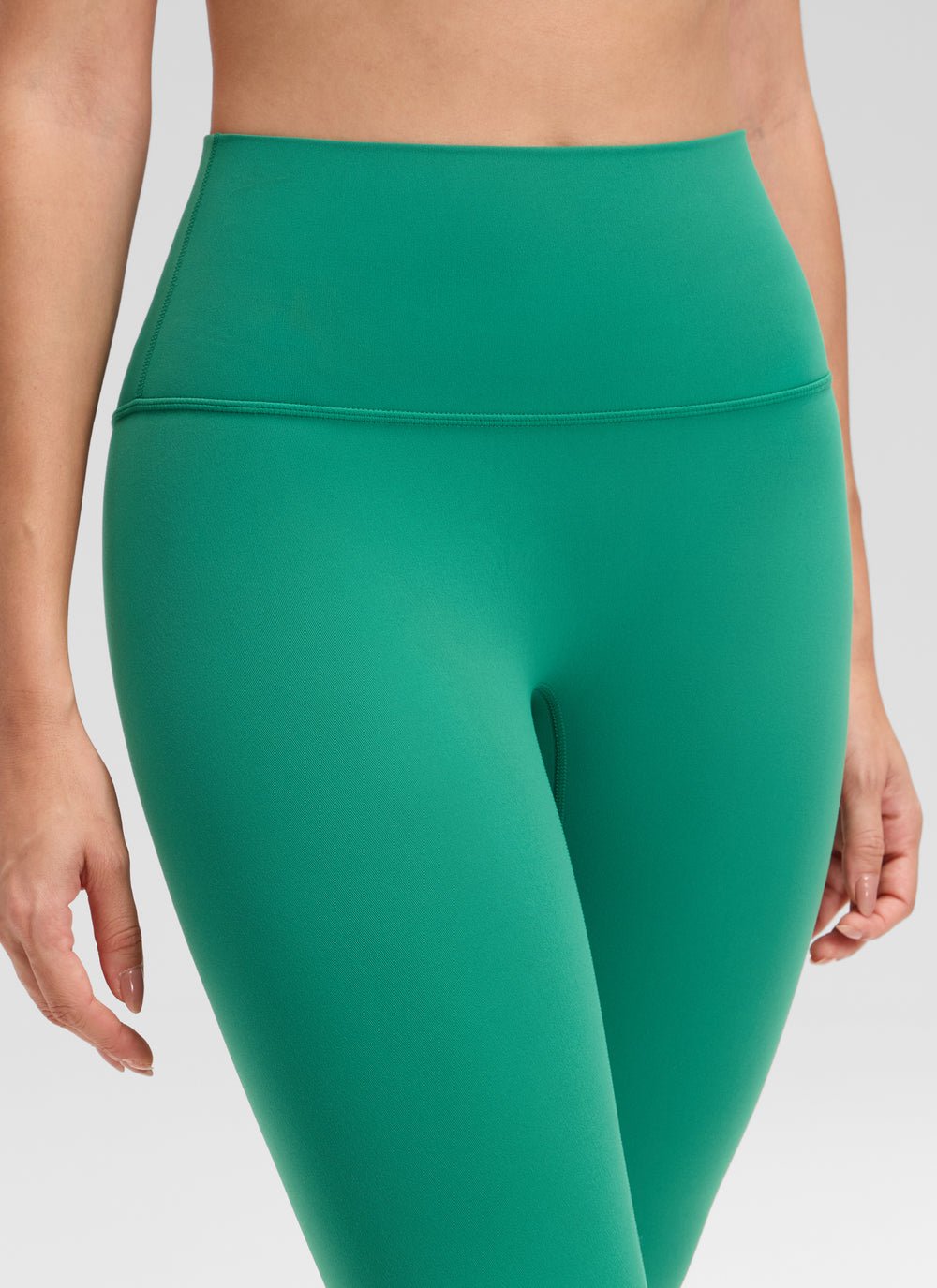
| Butterluxe | 81% polyamide, 19% Lycra; brushed; ultra-stretchy, very gentle compression | Yoga and lounge; no-front-seam versions available | Butterluxe No Front Seam Legging 25″: $44 (was $55) |
| Brushed Nakedfeel | 69% polyamide, 31% elastane; brushed; “decent compression”, 4-way stretch | Hot yoga or pilates; seamless waistband, crotch gusset | Brushed Nakedfeel Legging 25″: $35 (was $44) |
| SculptAir | 74% polyamide, 26% elastane; lasting support, moderate recovery; breathable, sweat-wicking | Yoga and training | SculptAir Supportive High Rise Yoga Legging 25″: $55 |
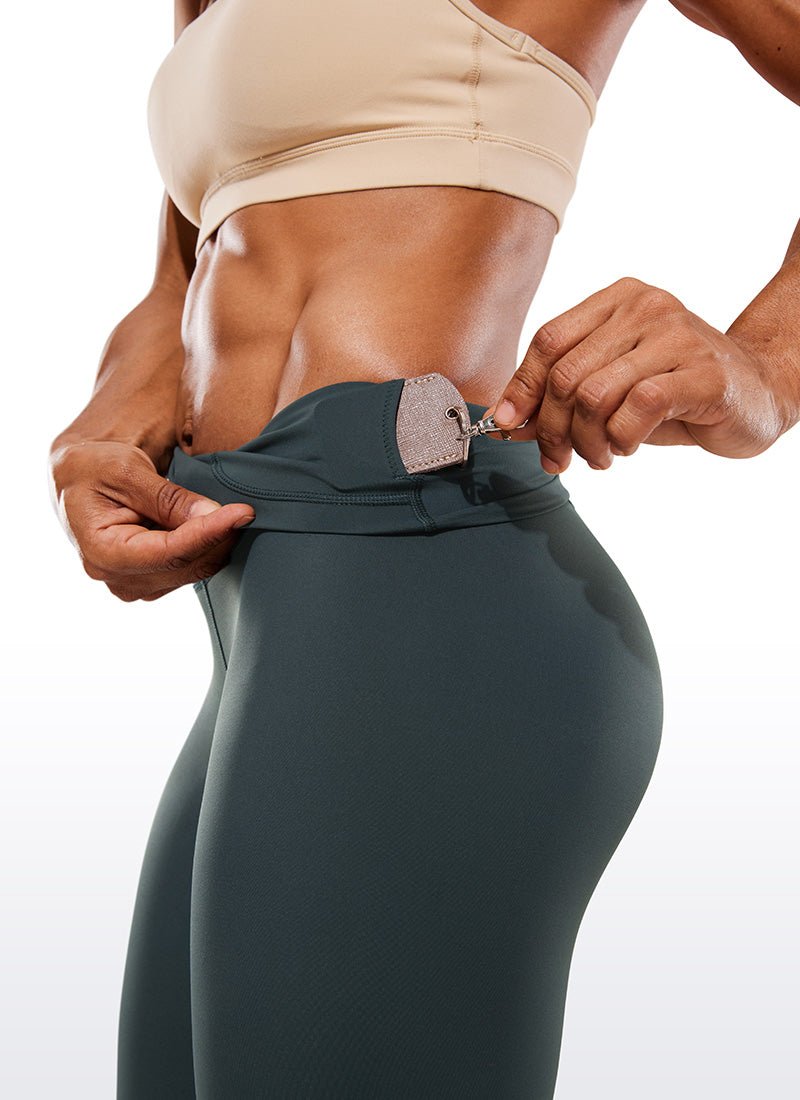
| Hugged Feel | 64% polyamide micro, 36% Lycra; max compression, thick and sturdy, sleek and cool to touch | Training; CRZ YOGA describes it as 100% squat proof; hidden waistband pocket | Hugged Feel Legging 25″ – High Compression: $51 |


Images: CRZ YOGA
Which one for which workout
- Mat or reformer pilates: Brushed Nakedfeel is the most direct match, since CRZ YOGA designs it for pilates and hot yoga, with a seamless waistband that won’t press into your back when lying down. The 25″ length sits close to the ankle on most heights, which keeps hems away from reformer straps.
- Slow yoga, yin and lounging: Butterluxe. It is the softest and least compressive of the four, which is exactly what you want for long holds and comfort. Choose a darker colour if opacity in deep folds worries you.
- Hot yoga: Brushed Nakedfeel, again because of its intended use, or SculptAir if you prefer a slightly more supportive feel.
- Gym, squats and lifting: Hugged Feel. The high elastane content and thicker knit are built for compression and coverage. The hidden waistband pocket is useful for a locker key.
- One pair for everything: SculptAir sits in the middle, with moderate support that works for both yoga and training.
Honest trade-offs to keep in mind
- Brushed fabrics feel lovely but can pill sooner where they rub, such as between the thighs or against reformer carriages. Gentle washing helps.
- High compression isn’t for everyone. If you dislike a tight, held-in feel, Hugged Feel may feel restrictive outside the gym.
- Very soft, low-compression leggings show more. Butterluxe’s gentle compression means it skims rather than smooths.
- Delivery isn’t instant. CRZ YOGA’s shipping policy lists 5 to 15 business days to Australia, so plan ahead if you need a pair for a class next week.
How to buy and save at CRZ YOGA AU
CRZ YOGA did not have a public discount code for its Australian store when we checked, but there are three easy ways to keep costs down:
- Free shipping over $89 AUD. Two pairs of leggings, or a pair plus a sports bra, usually clears the threshold.
- Look for marked-down core styles. When we checked, several popular leggings were reduced, including Butterluxe No Front Seam 25″ at $44 (from $55) and Brushed Nakedfeel 25″ at $35 (from $44).
- Use the 30-day return window wisely. CRZ YOGA offers returns within 30 days of receiving your item. Try leggings on at home and do the squat test in daylight before removing tags.
If you are building a workout wardrobe from scratch, a practical combination is one softer pair for yoga or pilates and one compressive pair for the gym. Buying both at once also gets you past the free-shipping threshold.
Compare CRZ YOGA legging fabrics (AU store)
Sources (checked 13 November 2026): CRZ YOGA AU product pages for Butterluxe No Front Seam Legging 25″, Brushed Nakedfeel Legging 25″, SculptAir Supportive High Rise Yoga Legging 25″ and Hugged Feel Legging 25″ – High Compression (au.crzyoga.com); CRZ YOGA AU Shipping Policy and Refund Policy (au.crzyoga.com/policies).