

Disclosure: This guide contains one affiliate link and a discount code. If you buy through them, She Chooses Well may earn a commission at no extra cost to you. This article is general information, not medical advice. Prices were checked on IM8’s US store on 13 November 2026 and are in USD.
Walk down any supplement aisle and you’ll see two very different promises. The classic multivitamin says: one small tablet covers your nutritional gaps. The greens powder says: one scoop of superfoods, probiotics and adaptogens does far more than a multivitamin ever could. Then there are the all-in-one drinks that try to be both at once.
If you’re trying to decide what actually belongs in your routine, the honest answer depends on what you eat, what life stage you’re in and what you’re hoping to fix. This guide breaks down what each product type really contains, where they overlap, where they leave gaps, how to read a label without getting lost in marketing, and how to avoid the most common mistake: doubling up on the same nutrients.
The short answer
| If you… | You probably need… |
|---|---|
| Eat a varied diet and just want insurance | A basic multivitamin is usually enough. A greens powder is optional. |
| Rarely eat vegetables and fruit and want an easy daily habit | A greens or all-in-one powder can help with convenience, but it doesn’t replace food. |
| Have a known deficiency (iron, B12, vitamin D) | A targeted supplement at the dose your doctor recommends. Neither product type is designed for this. |
| Are pregnant, trying to conceive or breastfeeding | A prenatal chosen with your doctor or midwife. Don’t swap it for a greens powder. |
| Already take a multivitamin and are adding a powder | Check the overlap first. Most all-in-one powders already contain a full multivitamin. |
What a multivitamin actually is
A multivitamin is a fixed blend of vitamins and minerals, usually dosed around 100% of the daily value for most nutrients. Its job is modest: fill small gaps in an imperfect diet. It doesn’t contain fibre, plant compounds from whole foods, or probiotics, and it isn’t meant to.
Strengths:
- Cheap and simple. Store-brand multivitamins often cost a fraction of a powder per day.
- Standardised doses. You can see exactly how much of each vitamin and mineral you’re getting.
- Women-specific formulas often include iron and extra folate, which matter for menstruating women.
Limits:
- Calcium and magnesium are usually low, because full doses are too bulky for one tablet.
- Vitamin D may be lower than what some people need, especially in winter or if you rarely get sun.
- No fibre, no polyphenols and none of the other compounds you’d get from eating vegetables and fruit.
What a greens powder actually is
“Greens powder” isn’t a regulated category. Some products are simply dried and powdered vegetables, grasses and algae. Others are full “all-in-one” formulas that add a multivitamin, probiotics, digestive enzymes, adaptogens and mushroom extracts on top.
That difference matters. A pure greens blend usually contains small amounts of vitamins, because a scoop of dried vegetables is only a few grams. An all-in-one powder with an added vitamin premix is, in effect, a multivitamin in drink form plus extras.
What greens powders do well
- Habit and convenience. Many people find a morning drink easier to stick with than swallowing tablets.
- Breadth of ingredients. Probiotics, prebiotic fibre, antioxidants and plant extracts that a tablet can’t easily include.
- Taste and hydration. Some include electrolytes and taste good enough to replace a sugary drink.
Where they fall short
- They aren’t vegetables. A scoop has a few grams of plant material. A single serving of real vegetables has far more fibre and volume.
- Proprietary blends can hide doses. If a label lists a “superfood blend” with one total weight, you can’t tell how much of each ingredient is there.
- Cost. Premium powders often cost several dollars a day.
Do you need both? Usually not
If your greens powder is an all-in-one formula with a full vitamin and mineral premix, taking a multivitamin on top usually means doubling up. For water-soluble vitamins like vitamin C and most B vitamins, the excess is mostly excreted. For others, stacking matters more:
- Vitamin A (as retinol), vitamin D, zinc, selenium and iron all have established tolerable upper intake levels. Two full-dose products plus fortified foods can push you closer to those limits than you might expect.
- Vitamin B6 in high doses over long periods has been linked to nerve symptoms. It shows up in many energy and stress products, so totals add up quickly.
- Vitamin K can interact with blood-thinning medication. If you take warfarin or similar, talk to your doctor before starting any product that contains it.
A simple rule: choose one “base” product (a multivitamin or an all-in-one powder), then add single nutrients only where you have a specific reason, ideally confirmed by a blood test.
What women in particular should check
Iron
Menstruating women need more iron than men, and many women’s multivitamins include it. Many greens and all-in-one powders leave iron out, partly because it can cause stomach upset and interacts with other minerals. If you switch from a women’s multivitamin to a powder without iron, you may be removing a nutrient you were relying on. If you have heavy periods or have been told your iron is low, ask your doctor whether you need a separate iron supplement.
Folate
Folate matters for anyone who could become pregnant. Look for folate listed as “methylfolate” or “folic acid” with a clear dose. If you’re planning a pregnancy, a dedicated prenatal is usually the better choice.
Vitamin D and calcium
Both matter for bone health, and both are often under-dosed in all-in-one products because calcium in particular is bulky. If you avoid dairy, check your total calcium intake from food and consider whether you need more.
B12
If you eat little or no animal food, B12 is the nutrient most worth securing. Most multivitamins and all-in-one powders include it; check the amount.
How to read a supplement label in two minutes
- Find the Supplement Facts panel, not the front-of-pack claims.
- Check the % Daily Value column. Note anything well above 100% and whether you’re getting the same nutrient elsewhere.
- Look for proprietary blends. A single total weight for a long list of ingredients means you can’t judge individual doses.
- Look for third-party testing. Certifications such as NSF Certified for Sport or USP Verified mean an independent organisation has tested the product for contents and contaminants. This matters because supplements aren’t approved before sale in the US.
- Check what’s left out. Iron, calcium, caffeine and added sugar are the four to look for.
- Read the “who shouldn’t take this” section. Pregnancy, medications and allergies are usually covered there.
The real cost comparison
Price per serving is where these products differ most. A basic multivitamin can cost cents per day. A premium all-in-one powder can cost several dollars per day. The fair comparison is not “powder vs one multivitamin” but “powder vs everything it would replace”, and then asking honestly whether you’d take all those separate supplements anyway. If the answer is no, the replacement value is mostly theoretical.
When a powder probably isn’t worth it
All-in-one powders are a convenience product, and convenience is only worth paying for if it changes what you actually do. A powder is probably not the best use of your money if:
- You already eat several portions of vegetables and fruit most days and take a basic multivitamin without trouble.
- You’re taking it to fix a specific symptom, such as fatigue, hair shedding or poor sleep, without knowing the cause. Those symptoms can come from iron deficiency, thyroid issues, stress or sleep habits, and a blood test or a conversation with your doctor will tell you more than any blend.
- The cost would make you skip groceries such as frozen vegetables, beans or fish, which deliver more nutrition per dollar.
- You know you won’t drink it daily. A subscription you forget about is the most expensive supplement there is.
A closer look at an all-in-one option: IM8 Daily Ultimate Essentials
IM8 is an all-in-one supplement brand co-founded by David Beckham. Its main product, Daily Ultimate Essentials (sold in a “Pro” version on the US store), is a powdered drink that combines a multivitamin with greens, probiotics and several other ingredient groups. It’s a useful example of how the all-in-one category works in practice.
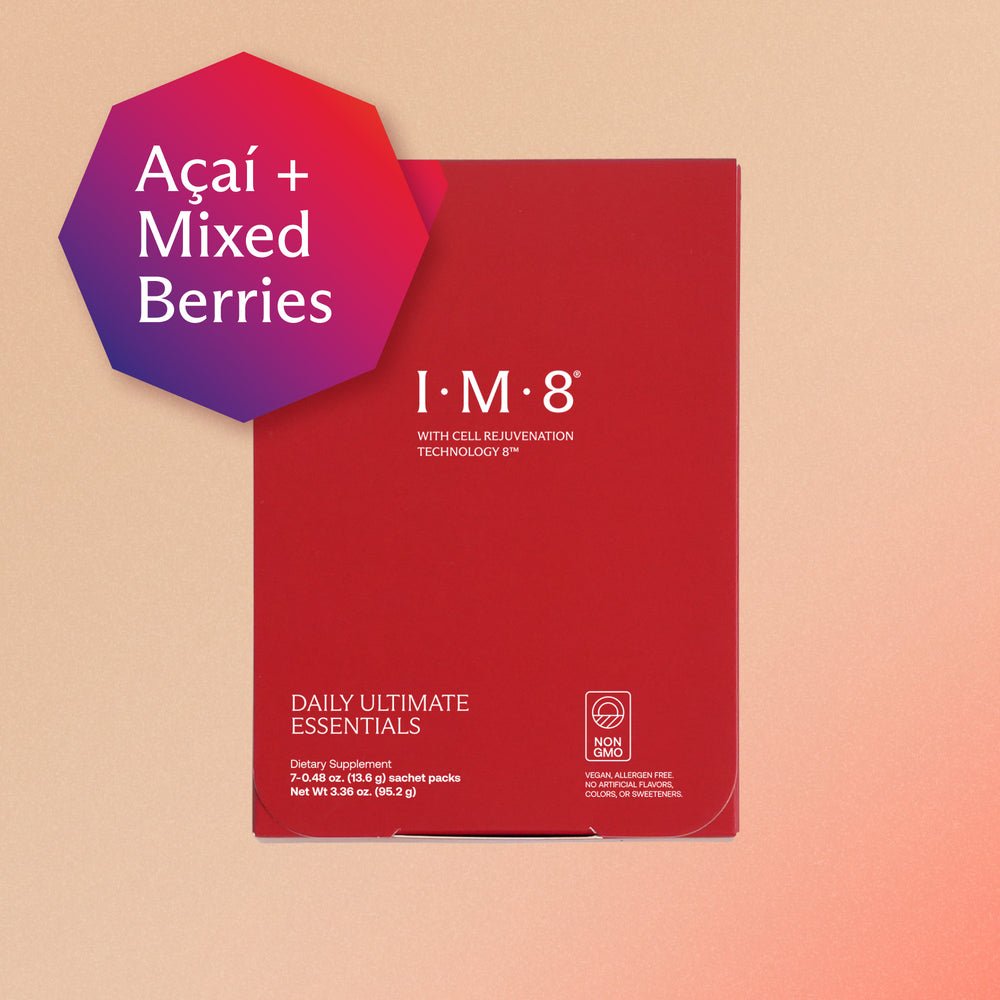
What’s in it, according to IM8
- 90 ingredients that IM8 says replace 16 separate supplements.
- Active-form B vitamins, including methylated B12 and folate.
- CoQ10, magnesium bisglycinate and vitamin K2 (MK-7).
- Probiotics (10 billion CFU), prebiotics and digestive enzymes.
- Selenium, choline, MSM and saffron.
- Superfoods, greens, adaptogens and mushroom extracts, plus electrolytes.
Just as important is what IM8 says it does not contain: caffeine, added sugar, creatine, collagen, NAC, ashwagandha, hemp/CBD, iron, beta-alanine, gluten and artificial sweeteners.
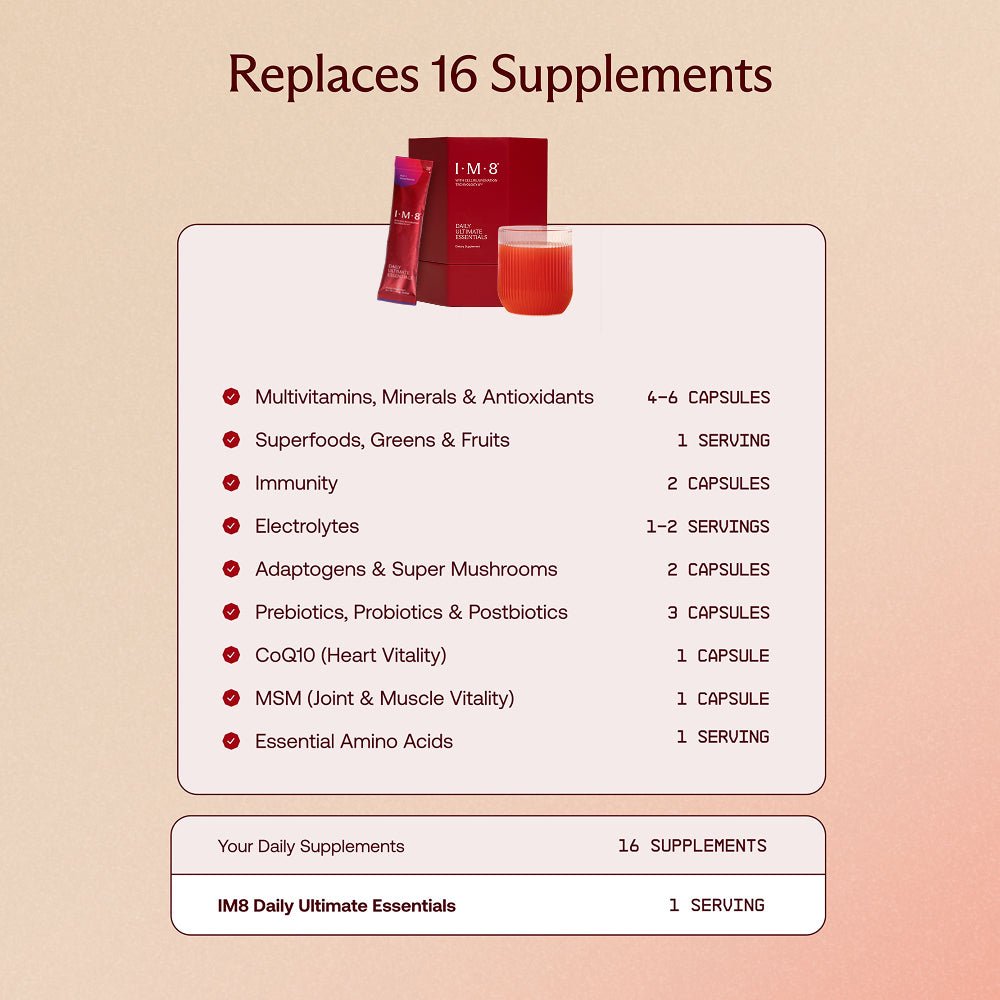
How it scores against our checklist
| Checklist item | IM8 Daily Ultimate Essentials |
|---|---|
| Third-party testing | NSF Certified for Sport, per IM8; IM8 also publishes a contaminant screening report from an independent lab |
| Iron | Not included. Women who relied on iron from a multivitamin should plan for it separately if needed. |
| Caffeine / added sugar | Neither, per IM8 |
| Folate form | Methylated folate, per IM8 |
| Overlap risk | High if you also take a multivitamin: it already includes a full vitamin and mineral blend |
About the results claims
IM8’s site cites a 12-week randomised controlled trial in which, for example, 95% of participants felt a boost in daily energy and 80% reported better sleep. These are self-reported outcomes published by the brand. They’re worth knowing about, but they aren’t the same as independently replicated, peer-reviewed measurements, so treat them as the brand’s claims rather than guaranteed results.
Price
| Option | Price (USD) | Per serving | Guarantee |
|---|---|---|---|
| One-time purchase (30 servings) | $112 | about $3.73 | — |
| 30-day subscription | $89 every 4 weeks | $2.97 | 30-day money-back |
| 90-day subscription | $235 every 12 weeks | $2.61 | 90-day money-back |
Subscriptions can be paused or cancelled, according to IM8, and shipping is free. When we checked, IM8 was also running a November welcome offer that bundled a free welcome kit with subscriptions.
Who it suits, and who it doesn’t
- Good fit: someone who wants a single daily habit instead of several pills, values third-party testing and is comfortable with the price.
- Think twice: if you rely on a multivitamin for iron, if you’re pregnant or planning a pregnancy (choose a prenatal with your doctor), if you take blood thinners (it contains vitamin K2), or if budget matters more than convenience.
How to buy and save on IM8
If you decide an all-in-one powder is right for you, there are three ways to keep the cost down:
- Use the code GET for 10% off at checkout.
- Choose the longest subscription you’re comfortable with. The 90-day plan has the lowest per-serving price and the longest money-back window.
- Stop your multivitamin (after checking iron and anything else it was covering) so you aren’t paying twice for the same nutrients.
Whether GET combines with the current subscription offer depends on IM8’s checkout rules, so compare the totals before you pay. Enter GET in the discount field and check the final price on the order summary.
See IM8 Daily Ultimate Essentials – code GET for 10% off
Whatever you choose, start with food, add one base product, and treat every extra supplement as something that needs a reason.
Sources (checked 13 November 2026): IM8 Daily Ultimate Essentials Pro product page, ingredient summary and pricing (im8health.com); IM8 homepage claims on certification and trial results. General nutrition information reflects widely published guidance from the US National Institutes of Health Office of Dietary Supplements on multivitamins, iron, folate, vitamin D and tolerable upper intake levels.