

Disclosure: This guide contains one affiliate link and a discount code. If you buy through them, She Chooses Well may earn a commission at no extra cost to you. Prices were checked on TIRTIR’s global store on 13 November 2026 and are in USD.
Cushion foundations have gone from a Korean beauty curiosity to a staple in make-up bags everywhere. They’re quick, portable and forgiving. But buying one online comes with a familiar problem: the shade looked perfect on the swatch photo and turned out orange, grey or two shades too light in real life.
This guide explains how cushion foundations differ from liquid foundation, how to read shade codes so you choose the right undertone and depth, how to test a shade at home before committing, which finish suits which skin type, and how to keep a cushion hygienic. At the end we look at one brand with an unusually wide cushion shade range.
What makes a cushion foundation different
A cushion is liquid foundation soaked into a sponge inside a compact. You press a puff onto the sponge to pick up a thin layer of product and tap it onto the skin. Compared with a bottle of liquid foundation:
| Cushion | Liquid foundation | |
|---|---|---|
| Application | Tapped on with a puff; very thin, even layers | Brush, sponge or fingers |
| Portability | Built-in mirror and puff; easy touch-ups | Needs a separate tool and mirror |
| Coverage control | Buildable in layers | Depends on formula and tool |
| Hygiene | Puff touches skin and product repeatedly; needs regular cleaning | Product stays in the bottle until dispensed |
| Value | Smaller fill (often around 15–18 g); refills available from many brands | Larger volume per purchase |
Reading shade codes: number and letter
Most Korean cushion brands use a code such as 21N or 23W:
- The number is depth. Lower numbers are lighter; higher numbers are deeper. Historically, many Korean ranges stopped around the low 20s, which is why people with medium and deep skin struggled to find a match. Newer ranges go much further.
- The letter is undertone. C means cool (pink or red undertone), N means neutral, and W means warm (yellow, golden or olive undertone).
Finding your undertone
- Look at the veins on your inner wrist in daylight. Mostly blue or purple suggests cool; green suggests warm; hard to tell or a mix suggests neutral.
- Think about jewellery. If silver flatters you more, you may lean cool; if gold does, you may lean warm.
- Consider how you tan. Burning easily and turning pink can suggest cool; tanning easily to golden can suggest warm.
- Check a white T-shirt test. If bright white looks harsh against your face and off-white or cream looks better, you may lean warm.
None of these is perfect on its own. If two or three point the same way, that’s a good sign. If they’re mixed, start with N.
Matching depth across brands
If you already have a foundation that matches well, look at the brand’s shade finder or compare the swatch of your current shade to the new brand’s chart in similar lighting. Shade codes are not standard across brands: a 21 in one range may be closer to a 19 or 23 in another.
Why cushions became so popular
Cushion compacts first took off in South Korea in the late 2000s and early 2010s, inspired by the idea of applying sunscreen and tint with a stamp-like sponge. Their appeal is practical: no pump, no spills, a built-in mirror and a puff that makes thin, even application easy, even in a moving car or an office bathroom. For many people, the biggest benefit is that a cushion encourages less product. Tapping on a thin film naturally gives a more skin-like finish than pouring a pump of liquid into your palm.
How to test a shade at home
- Start with a sample if you can. Sachets or minis are the cheapest way to test without committing to a full compact.
- Swatch on the jawline, not the back of your hand. Apply three small stripes of neighbouring shades from cheek to neck.
- Wait 15–20 minutes. Many foundations oxidise and deepen slightly as they dry and mix with skin oils.
- Check in daylight by a window, then in your usual indoor lighting.
- Pick the stripe that disappears. The right shade blends into both cheek and neck without a visible line.
If you’re between two shades, the lighter one can often be warmed with bronzer, while a too-dark shade is harder to fix. If your face is redder than your neck, a neutral shade usually looks more natural than a cool one.
Choosing a finish for your skin type
| Finish | Looks like | Best for | Watch out for |
|---|---|---|---|
| Semi-matte | Smooth, soft-focus, little shine | Oily and combination skin; long days | Can cling to dry patches if skin isn’t prepped |
| Semi-glow / satin | Natural sheen on high points | Normal to dry skin; everyday wear | May need powder on the T-zone if you’re oily |
| Dewy / glow | Fresh, luminous, skin-like | Dry or mature skin; light coverage lovers | Can look greasy on very oily skin by afternoon |
Application: getting a skin-like result
- Prep matters more with cushions. Because the layer is thin, texture shows through. Moisturise and give it a few minutes to absorb.
- Press, don’t swipe. Lightly press the puff into the sponge, then tap onto the centre of the face and work outward.
- Build where you need it. Use one thin layer all over, then add a second only on redness or uneven areas.
- Use less around the eyes and nose creases, where product settles into lines.
- Set selectively. A light dusting of powder on the T-zone helps longevity without losing the cushion finish elsewhere.
Coverage: how much do you actually need?
Coverage describes how much a foundation hides. Brands describe it loosely, so it helps to know what each level looks like in practice:
- Sheer: evens out tone slightly; freckles and most redness still show. Best for good skin days and people who dislike the feeling of make-up.
- Light to medium: blurs mild redness and uneven tone in one layer. The most versatile everyday level.
- Medium to full: covers most redness, post-blemish marks and uneven pigmentation, especially when built in two thin layers.
- Full: designed to hide almost everything. Looks most natural when applied thinly and built only where needed.
Cushions make coverage easy to adjust. A full-coverage cushion applied in a single thin layer often looks like medium coverage, so you don’t necessarily need two products for different days.
Seven shade-matching mistakes
- Matching to your hand or inner arm. These areas are often lighter or a different undertone from your face.
- Matching to your cheek only. Your face should blend into your neck; check both.
- Judging immediately. Oxidation can shift a shade within minutes. Wait before deciding.
- Testing under warm bathroom lighting. Yellow bulbs make warm shades look perfect and cool shades look grey.
- Ignoring seasonal change. Many people are a shade or two deeper in summer. A lighter and a deeper shade can be mixed in between seasons.
- Choosing “pink” to counter sallowness. If your skin looks dull, a correctly matched neutral shade plus blush usually looks better than a cool shade that’s wrong for your undertone.
- Assuming the same code means the same shade. Shade codes vary between brands and even between product lines from the same brand.
Layering with skincare and sunscreen
Cushions sit on top of your skincare, so what’s underneath affects the result. Use a moisturiser suited to your skin type and give it a few minutes to absorb. If you wear a separate sunscreen, let it set before tapping on your cushion so the layers don’t pill. Silicone-heavy primers can stop some cushions from gripping; if your foundation slides around, try skipping the primer. And don’t rely on foundation as your only sun protection: most people apply far too thin a layer for the SPF on the label to apply.
Keeping a cushion hygienic
The puff goes from your face back into the product many times a day. Bacteria and skin oils build up, which can affect both your skin and the formula. A simple routine:
- Wash the puff weekly with gentle soap or a make-up brush cleanser, rinse well and let it dry completely before reuse.
- Keep a spare puff so you always have a dry one ready.
- Replace puffs regularly when they stop springing back or look stained even after washing.
- Close the compact tightly to stop the sponge drying out.
- Use refills where available rather than buying a new compact, which is cheaper and creates less waste.
A wide-range option: TIRTIR Mask Fit cushions
TIRTIR is a Korean beauty brand best known for its Mask Fit cushion line. What stands out for shade matching is range: the Mask Fit Red Cushion lists 40 shades on TIRTIR’s global store, from 10C Shell to 55N Espresso, across cool, neutral and warm undertones. That’s notably broader than many traditional Korean cushion ranges.
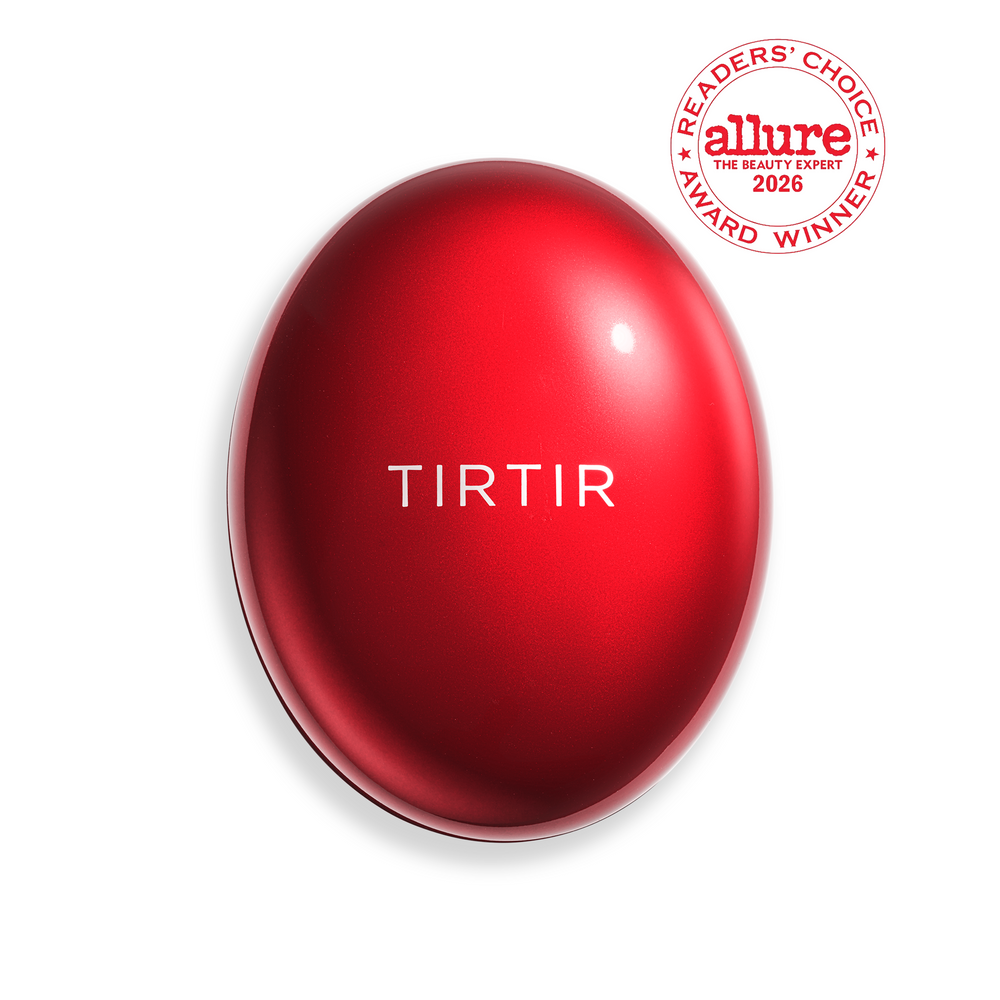
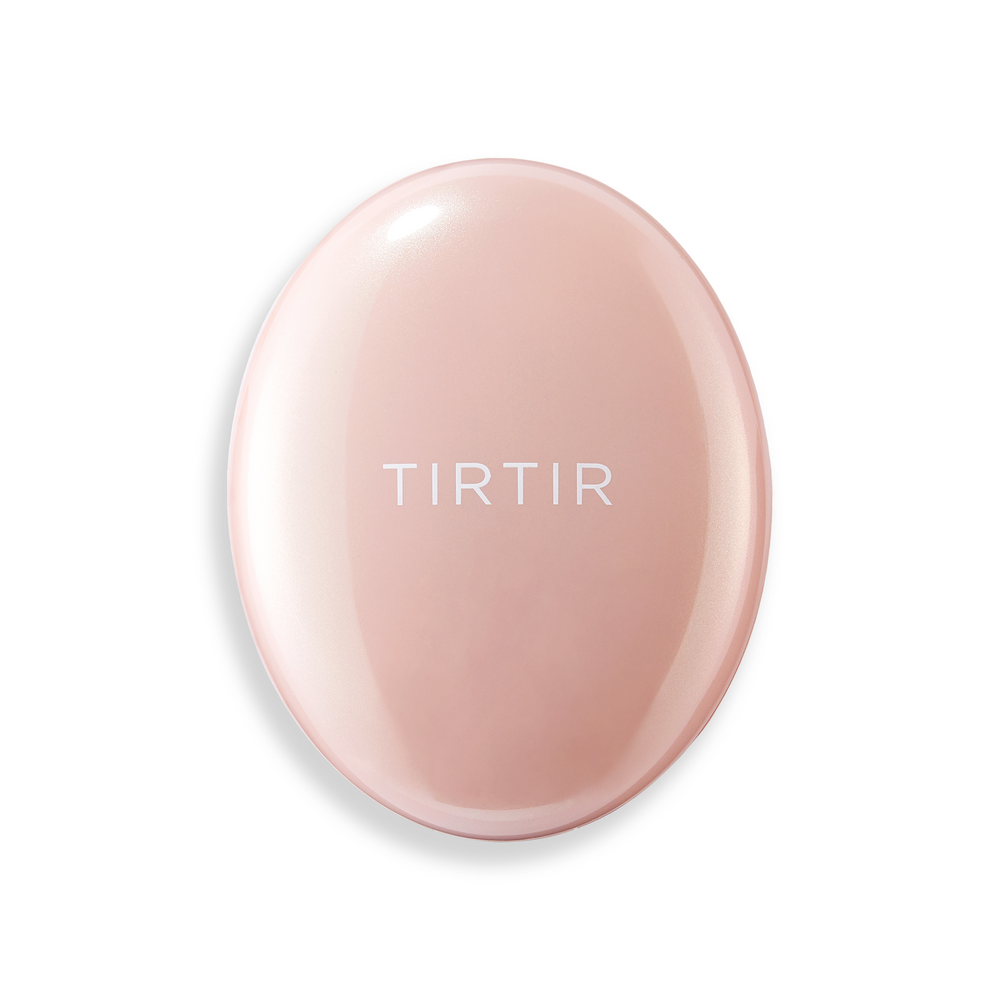
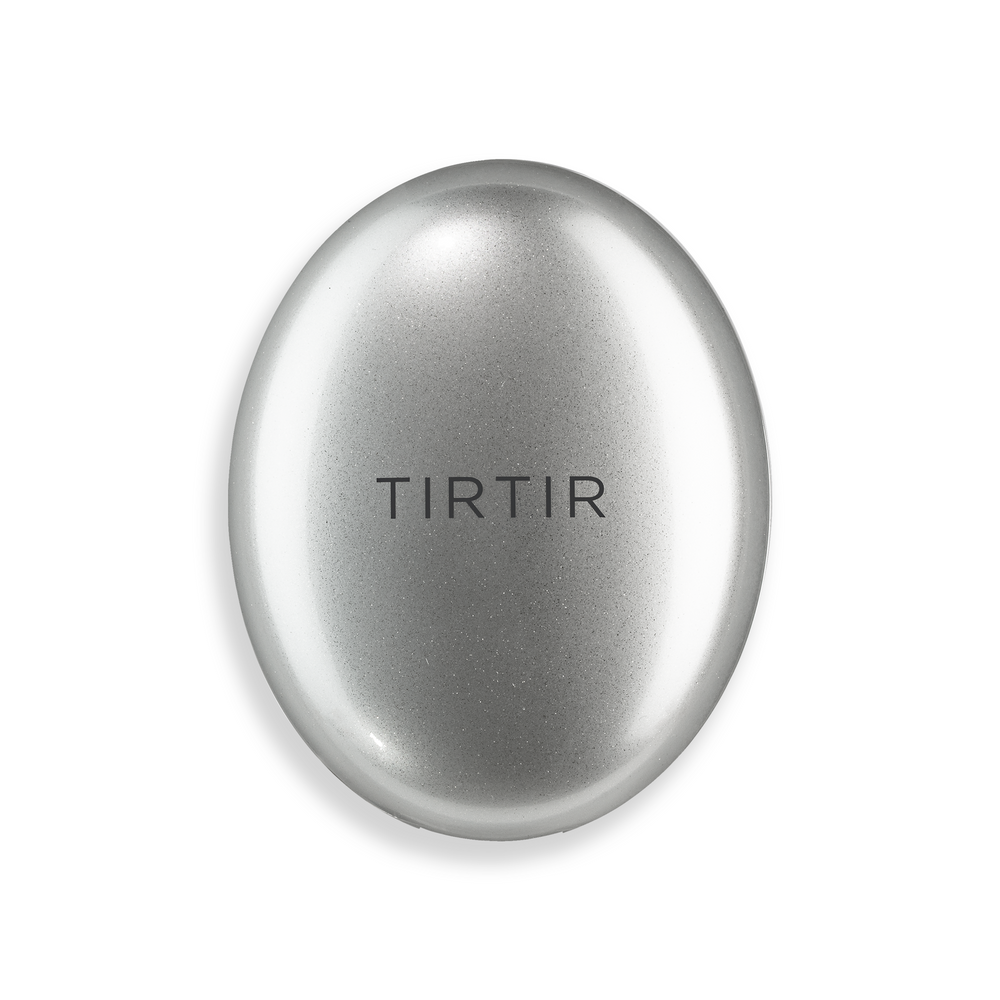

Images: TIRTIR
| Cushion | Finish and coverage (per TIRTIR) | Shades listed | Price (USD) |
|---|---|---|---|
| Mask Fit Red Cushion | Full coverage, natural semi-matte finish; described as hydrating | 40 | $16.25 (listed down from $25) |
| Mask Fit All Cover Cushion | Full coverage with a focus on long-lasting hydration | 20 | $16.62 (listed down from $25) |
| Mask Fit Aura Cushion | Buildable coverage, semi-glow finish | 20 | $17.87 (listed down from $25) |
| Mask Fit AI Filter Cushion | Positioned for a smooth, “poreless” finish | 30 | $17.87 (listed down from $25) |
| Tinted Skin Glow Cushion | Glow finish; TIRTIR says it’s built on a 73% serum base with peptides, hyaluronic acid and panthenol | 30 | $22 (listed down from $27) |
Which one for which skin
- Oily or combination skin, want full coverage: Mask Fit Red Cushion (semi-matte), the line with the widest shade range.
- Normal to dry skin, want a natural sheen: Mask Fit Aura Cushion (semi-glow).
- Dry or mature skin, prefer a fresh, skin-like look: Tinted Skin Glow Cushion.
- Not sure of your shade: TIRTIR sells Mask Fit Red Cushion sachets for $1.50, which is the cheapest way to test two or three neighbouring shades before buying a full compact.
Things to know before ordering
- Shipping: to North America from TIRTIR’s US distribution centre, $6.99 or free over $60; to the UK, £11 or free over £30; to Europe, $15 or free over $60; to Asia and Oceania, $20 or free over $70.
- Returns are strict: requests must be made within 14 days of delivery, and products must be unopened, unused, factory-sealed and in original packaging. In practice, that means you can’t return a cushion because the shade is wrong once you’ve opened it, another reason to test with sachets first.
- Undertone letters are TIRTIR’s own system. A 21N here won’t necessarily match a 21N elsewhere; use the jawline test.
How to buy and save at TIRTIR
- Use the code DAILYPICKJOURNAL at checkout for 5% off.
- Order sachets with your first compact if you’re unsure between two shades, so you can confirm before opening the compact.
- Aim for the free-shipping threshold for your region; a cushion plus a refill or spare puff often gets you close.
Enter DAILYPICKJOURNAL in the discount field and check the order summary before paying.
Find your TIRTIR cushion shade – code DAILYPICKJOURNAL
Sources (checked 13 November 2026): TIRTIR global store product pages for Mask Fit Red Cushion, Mask Fit All Cover Cushion, Mask Fit Aura Cushion, Mask Fit AI Filter Cushion, Tinted Skin Glow Cushion and Mask Fit Red Cushion sachets; TIRTIR Shipping Policy and Return Policy (tirtir.global).